
Japan and South Korea sit just two hours apart by flight, share deep historical connections, and attract many of the same travelers. Yet they offer profoundly different experiences. I have spent a combined seven months between the two countries across multiple trips, and the question I get asked most often is: "If I can only visit one, which should it be?"
The honest answer is that both countries are extraordinary, and you should eventually visit both. But if you are choosing where to go first, this comparison will help. I will cover ten categories with genuine, unvarnished assessments -- no diplomatic cop-outs where everything is "equally amazing."
1. Food Scene
Japan
Japanese cuisine is arguably the most refined in the world. The obsession with perfecting a single dish defines the food culture: a ramen shop serving one style of ramen for 40 years, a sushi chef who apprenticed for a decade before being allowed to serve customers, a tempura restaurant that has been frying vegetables in the same sesame oil blend since 1930.
What to eat: Ramen (regional styles vary dramatically -- Hakata tonkotsu, Sapporo miso, Tokyo shoyu), sushi (from $1 conveyor belt plates to $300 omakase), yakitori, tempura, udon, soba, okonomiyaki, takoyaki, wagyu beef, kaiseki (multi-course haute cuisine)
Where to eat cheaply: Convenience stores (7-Eleven, Lawson, FamilyMart) serve onigiri, bento boxes, and sandwiches that are genuinely delicious for $2-$5. Department store basement food halls (depachika) offer high-end prepared foods. Standing ramen and soba shops serve full meals for $5-$8.
Cost: Budget meal $5-$10. Mid-range dinner $15-$30. Fine dining $50-$300.
South Korea
Korean food is bolder, more communal, and more adventurous than Japanese cuisine. Meals are built around sharing: banchan (side dishes) arrive in an endless stream, barbecue is grilled at the table by the group, and stews bubble away on portable burners while everyone reaches across with their chopsticks.
What to eat: Korean BBQ (samgyeopsal pork belly, galbi beef ribs), bibimbap, kimchi jjigae (kimchi stew), tteokbokki (spicy rice cakes), jajangmyeon (black bean noodles), fried chicken (a national obsession -- Korean fried chicken is legitimately the best in the world), street food (hotteok, kimbap, mandu), temple food (Buddhist vegetarian cuisine)
Where to eat cheaply: Street markets (Gwangjang Market in Seoul is legendary), kimbap shops (the Korean equivalent of a quick lunch counter, $3-$5), convenience stores (CU, GS25, 7-Eleven -- not quite as good as Japan's but very solid), university neighborhoods where competition keeps prices low.
Cost: Budget meal $4-$8. Mid-range dinner $10-$25. Fine dining $40-$200.
Verdict: This depends entirely on your palate. Japan wins for precision, subtlety, and the experience of watching a master craft a perfect single dish. Korea wins for bold flavors, communal energy, and sheer variety at low prices. If you love heat and fermented flavors, Korea. If you appreciate minimalism and technique, Japan.
2. Cost of Travel
Japan
Japan has a reputation for being expensive, and it is -- compared to Southeast Asia. Compared to Western Europe or the US, it is often comparable or cheaper, especially with the yen's recent weakness.
- Accommodation: Budget hotels and hostels from $25-$50/night. Business hotels (Toyoko Inn, APA Hotel) from $40-$70/night. Mid-range from $80-$150/night
- Transport: The JR Pass (7-day: $260, 14-day: $420) makes bullet trains affordable. City transport averages $5-$8/day
- Daily budget: $60-$80 budget, $100-$150 mid-range, $200+ comfortable
South Korea
South Korea is noticeably cheaper than Japan across almost every category.
- Accommodation: Guesthouses and hostels from $15-$30/night. Budget hotels from $30-$50/night. Mid-range from $60-$100/night
- Transport: The KTX (Korea's bullet train) costs less than Japan's shinkansen. Seoul's subway is $1.25 per ride. T-money card works nationwide
- Daily budget: $40-$60 budget, $70-$120 mid-range, $150+ comfortable
Verdict: South Korea is 20-30% cheaper than Japan for the same quality of experience. If budget is a primary concern, Korea stretches further.
3. Culture and History
Japan
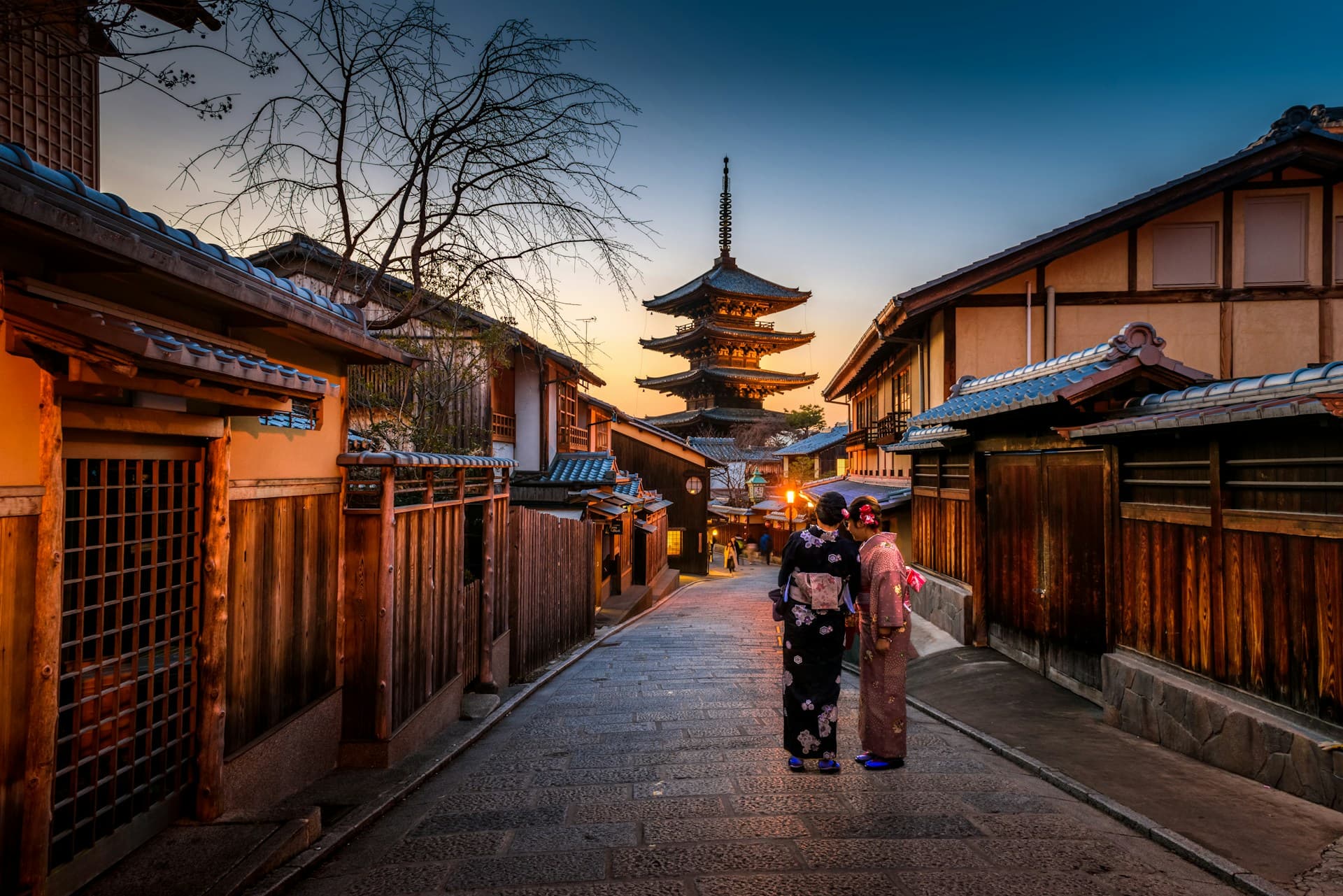
Japan's cultural depth is staggering. Thousands of temples and shrines, a living tradition of tea ceremony, flower arranging, calligraphy, martial arts, and theatrical arts (kabuki, noh, bunraku). The contrast between ultra-modern Tokyo and the ancient temples of Kyoto creates a cultural whiplash that never gets old.
Highlights: Fushimi Inari's 10,000 torii gates, Kinkaku-ji (Golden Pavilion), a tea ceremony in a Kyoto machiya, watching sumo in Tokyo, sleeping in a Buddhist temple on Mount Koya, attending a matsuri (festival)
South Korea
Korea's cultural scene has exploded in global visibility thanks to the Korean Wave (Hallyu), but the traditional culture runs just as deep. Joseon-era palaces, Buddhist temples, the DMZ (one of the most surreal places on Earth), and a 5,000-year history of resilience and reinvention.
Highlights: Gyeongbokgung Palace and the changing of the guard, the DMZ and JSA tour, Bulguksa Temple in Gyeongju, jjimjilbang (Korean bathhouse culture), hanbok (traditional clothing) rental and photo shoots, the street art and indie galleries of Ihwa Mural Village
Verdict: Japan's traditional culture is more visually iconic and deeply ritualized. Korea's culture is more dynamic and evolving, with a stronger interplay between tradition and modernity. For temple-hopping and ancient aesthetics, Japan. For a living, evolving cultural scene, Korea.
4. Nightlife
Japan
Japan's nightlife is diverse but can feel impenetrable to outsiders. Tokyo's Golden Gai (200+ tiny bars in a six-alley labyrinth), Shinjuku's neon-drenched chaos, Osaka's Dotonbori entertainment district, izakaya (Japanese pubs) everywhere -- the options are endless.
The experience: Smaller, more intimate venues. Many bars seat 6-8 people. The emphasis is on conversation, craft cocktails, or a specific music genre. Some bars (especially in Golden Gai) charge a cover or seating fee ($5-$15). Late-night ramen after drinking is a national tradition.
South Korea
Korean nightlife is bigger, louder, and more accessible to foreigners. Seoul's Hongdae, Itaewon, and Gangnam districts pulse until 5-6am on weekends. The drinking culture is robust -- soju flows freely, and saying "one more round" (han jan deo) is practically a national sport.
The experience: Larger venues, cheaper drinks ($4-$8 for soju and beer at most places), and a culture that genuinely stays out all night. Noraebang (karaoke rooms) are a must-try -- private rooms where you and your group sing for hours. Chimaek (chicken and beer) at 2am is a Korean institution. Nightclub culture is strong in Gangnam and Hongdae.
Verdict: Korea wins for nightlife, and it is not close. The energy is more accessible, the prices are lower, the venues stay open later, and the culture actively encourages going out. Japan's nightlife is more atmospheric and intimate but harder to navigate as an outsider.
5. Nature and Scenery
Japan
Japan's natural landscape is exceptionally varied for a country its size: volcanic peaks (Mount Fuji, Mount Aso), subtropical beaches (Okinawa), alpine scenery (Japanese Alps), bamboo forests (Arashiyama), hot spring towns (onsen), and the otherworldly snow landscapes of Hokkaido.
Best nature experiences: Hiking the Kumano Kodo pilgrimage trail, soaking in an outdoor onsen with mountain views, walking through Yakushima's ancient cedar forests, cycling the Shimanami Kaido bridge route, skiing in Niseko or Hakuba
South Korea
Korea is 70% mountainous, and the hiking culture is deeply embedded. Mountains are accessible from every major city -- Bukhansan National Park is literally inside Seoul. The southern coast and Jeju Island offer volcanic landscapes, lava tube caves, and some of Asia's best scuba diving.
Best nature experiences: Hiking Bukhansan at dawn (you will share the trail with Korean grandparents who will outpace you), Seoraksan National Park in autumn, Jeju Island's volcanic craters and coastal walks (the Olle Trail), the DMZ's unintended nature preserve (the no-man's-land has become a wildlife sanctuary), cherry blossom season along Gyeongju's Bomun Lake
Verdict: Japan offers more variety (tropical to subarctic in one country) and more dramatic scenery. Korea offers better accessibility (nature is always close) and a more social hiking culture. For a nature-focused trip, Japan. For integrating nature into a city trip, Korea.
6. Ease of Travel
Japan
Japan's infrastructure is the best in the world. Bullet trains run to the minute. The metro systems in Tokyo and Osaka are extensive, clean, and well-signed in English. Google Maps works flawlessly with real-time transit information.
Challenges: The JR Pass system has become more expensive and complicated. Rural areas have limited English signage. Some restaurants and businesses are cash-only (though this is rapidly changing). Train station layouts can be labyrinthine.
South Korea
Korea's infrastructure is nearly as good as Japan's and in some ways more modern. The KTX high-speed rail, Seoul's subway (the cleanest and most efficient in Asia), and nationwide 5G coverage make getting around effortless.
Advantages over Japan: Korea is more compact (you can reach most destinations in 2-3 hours from Seoul). Incheon Airport is consistently ranked the world's best. The T-money transit card works on all public transit nationwide. Free high-speed wifi is available everywhere -- subway, buses, cafes, even hiking trails.
Verdict: Both countries are excellent for travelers. Japan has more extensive rail coverage and more destinations. Korea is more compact and slightly more digitally modern. For a first-time Asia traveler, Korea's compactness and ubiquitous wifi make it marginally easier.
7. Language Barrier
Japan
English proficiency in Japan is lower than many travelers expect. Outside major tourist areas, communication can be challenging. However, the culture is so service-oriented that people will go to extraordinary lengths to help you, even without shared language. Google Translate's camera feature (point at Japanese text for instant translation) is essential.
Useful: The Korean alphabet (hangul) can be learned in 2-3 hours. Japanese requires three writing systems (hiragana, katakana, kanji). This makes reading signs much harder in Japan.
South Korea
English proficiency is moderately better than Japan, especially among younger Koreans. Seoul's tourist infrastructure has excellent English signage. Korean pop culture's global reach means many young Koreans are eager to practice English with visitors.
Major advantage: The Korean alphabet (hangul) was deliberately designed to be easy to learn. You can learn to sound out Korean words in 2-3 hours. Even without understanding the meaning, being able to read menus and signs transforms the travel experience.
Verdict: Korea has a slight edge. Hangul's learnability is a genuine advantage, and English proficiency is marginally higher in tourist-facing contexts.
8. Shopping
Japan
Japan is a shopping paradise with depth across every category: vintage clothing in Tokyo's Shimokitazawa, electronics in Akihabara, ceramics and traditional crafts in Kyoto, stationery and design objects everywhere, and the 100-yen shops (Daiso, Seria) that sell genuinely useful items for $0.75.
Best buys: Japanese knives (Kappabashi in Tokyo), denim (Okayama and Kojima), ceramics and pottery, Japanese whisky, skincare and cosmetics, vintage clothing, anime and manga merchandise, Kit-Kat flavors (Japan has 300+ limited editions)
South Korea
Korea's shopping scene is driven by fashion, beauty, and K-pop merchandise. Myeongdong in Seoul is a skincare and cosmetics wonderland. Hongdae has independent fashion designers. The underground shopping arcades beneath major subway stations are vast and affordable.
Best buys: Korean skincare and cosmetics (10-step skincare products for a fraction of Western prices), K-pop merchandise (official stores in Gangnam and Hongdae), fashion (Korean street fashion is globally influential and affordable), electronics (Yongsan Electronics Market), traditional crafts (celadon ceramics, hanji paper goods)
Verdict: Japan for variety, craftsmanship, and unique finds across all categories. Korea for beauty products, fashion, and value. Both countries make it dangerously easy to fill a suitcase.
9. Technology and Modernity
Japan
Japan has a paradoxical relationship with technology. It is the land of bullet trains, robot restaurants, heated toilet seats, and vending machines that sell everything from hot coffee to fresh eggs. But it is also a country where many businesses still operate on fax machines, cash is king in surprising places, and some websites look like they were designed in 2003.
What will impress you: Convenience stores that function as banks, post offices, and printing shops. Heated and cooled toilet seats everywhere. Vending machines on every block. Train punctuality measured in seconds.
South Korea
Korea is arguably the most digitally advanced country on Earth. Free 5G everywhere. Cashless payment via smartphone is universal (many places do not accept cash at all). Delivery apps bring anything to your location in under 30 minutes. Self-serve kiosks, robot servers, and AI-powered everything.
What will impress you: Ordering food via tablet at every restaurant. Getting your subway exit route displayed on your phone in real-time. Same-day delivery for virtually anything. PC bangs (gaming cafes) where competitive gaming culture lives.
Verdict: Korea is more consistently modern in daily life. Japan blends high tech with deliberate analog traditions. If you want to see the future of urban living, Seoul. If you want a more layered mix of old and new, Japan.
10. Pop Culture and Entertainment
Japan
Anime, manga, video games, J-pop, and the broader otaku culture have shaped global entertainment for decades. Akihabara in Tokyo is the nerve center, but pop culture is woven into everyday Japanese life -- from themed cafes to arcade halls to the aesthetic sensibility visible in everything from train station design to convenience store packaging.
Experiences: Visit Studio Ghibli Museum, explore Akihabara's multi-story anime shops, play at a game center arcade, attend a J-pop concert, visit manga cafes, explore themed cafes (animal cafes, maid cafes, robot restaurants)
South Korea
The Korean Wave (Hallyu) has made K-pop, K-drama, Korean cinema, and Korean beauty global phenomena. BTS, BLACKPINK, Squid Game, and Parasite have put Korean culture at the center of global entertainment. Visiting Korea as a Hallyu fan is like a pilgrimage.
Experiences: Visit K-pop entertainment company buildings (HYBE, SM, JYP, YG) in Gangnam, attend a K-pop concert or fan event, explore K-drama filming locations, visit the Korean Film Museum, explore webtoon culture at the Naver Webtoon headquarters area, try K-beauty products at flagship stores
Verdict: This is entirely personal. If your heart belongs to anime, manga, and Nintendo, Japan is non-negotiable. If K-pop, K-drama, or Korean cinema sparked your interest in Asia, Korea will deliver.
The Summary: Choose Japan If...
- You are a food purist who values technique and tradition
- You want dramatic natural variety (beaches to snow in one country)
- Anime, manga, and gaming are important to you
- You want to visit iconic cultural sites (temples, shrines, Mount Fuji)
- You prefer intimate, atmospheric experiences
- This is your first trip to Asia and you want the most "different from home" experience
- You have 2+ weeks (Japan rewards longer trips with regional exploration)
Choose South Korea If...
- You love bold flavors, communal eating, and late-night food culture
- Budget is a significant factor (Korea is 20-30% cheaper)
- Nightlife is a priority
- K-pop, K-drama, or Korean cinema sparked your interest
- You want a more digitally seamless travel experience
- You prefer a compact country where everything is accessible from one base city
- You have 7-10 days (Korea's compactness means you can see a lot in a week)
The Best of Both: A Combined Trip
If you can swing 2-3 weeks, do both. A common and excellent route:
- Seoul (4-5 days): City exploration, food markets, nightlife, DMZ
- Fly to Osaka (2 hours, $80-$150 on budget airlines): Street food capital
- Kyoto (3-4 days): Temples, tea houses, traditional culture
- Tokyo (4-5 days): Pop culture, Tsukiji/Toyosu market, neighborhoods
- Optional: Day trips to Nara, Nikko, or Kamakura
Use TripGenie to plan a combined Japan-Korea itinerary. The app can optimize your route between both countries, suggest the best flight connections, and build a day-by-day plan that balances the unique strengths of each destination.
Whichever you choose first, you will want to visit the other soon after. Both countries leave that kind of mark on you -- the kind that makes you start planning the return trip before you have even left.
Topics

Written by
TripGenie Team
The TripGenie team is passionate about making travel planning effortless with AI. We combine travel expertise with cutting-edge technology to help you explore the world.
@tripgenieGet Travel Tips Delivered Weekly
Get our best travel tips, destination guides, and exclusive deals delivered straight to your inbox every week.
No spam, ever. Unsubscribe anytime.