
The Two Biggest Names in Asian Travel
Bali and Thailand dominate the "dream trip" conversation for a reason. Both deliver tropical beauty, rich culture, affordable living, and the kind of transformative travel experiences that stick with you for decades. They are also, despite surface similarities, fundamentally different destinations that attract different types of travelers.
Bali is a single island with a spiritual intensity, a world-class surf and wellness scene, and a compact geography that puts rice terraces, volcanic mountains, and coral reefs within an hour of each other. Thailand is an entire country with the diversity to match -- mega-cities, ancient temple complexes, jungle-covered mountains, and islands scattered across two different seas.
This guide compares them honestly across every category that matters, so you can choose the right destination for your specific trip.
The Quick Comparison
| Category | Bali | Thailand |
|---|---|---|
| Daily Budget (mid-range) | $50-90 USD | $40-70 USD |
| Best For | Wellness, surfing, spiritual culture | Food, nightlife, island diversity |
| Beaches | Good, better for surfing than swimming | Excellent, more variety |
| Temples | Hindu, uniquely atmospheric | Buddhist, grand and numerous |
| Food | Good, growing scene | World-class |
| Nightlife | Concentrated (Seminyak, Canggu, Kuta) | Diverse and legendary |
| Wellness/Yoga | World-leading destination | Strong, especially Koh Phangan and Chiang Mai |
| Diving | Very good (Nusa Penida, Tulamben) | Excellent (Koh Tao, Similan Islands) |
| Surfing | World-class | Limited |
| Digital Nomad | Top-tier infrastructure | Top-tier (Bangkok, Chiang Mai) |
| Visa (most nationalities) | 30 days free, extendable to 60 | 30-60 days free |
| Rainy Season | November-March | Varies by region, May-October general |
| Size | Small island (5,780 sq km) | Large country (513,120 sq km) |
Daily Budgets: Detailed Side-by-Side
Budget Traveler
| Expense | Bali | Thailand |
|---|---|---|
| Hostel dorm / guesthouse | $8-15 | $5-12 |
| Local warung/street food meal | $1.50-3 | $1-2.50 |
| Bintang beer / Chang beer | $2-3 (bar) | $1.50-2.50 (bar) |
| Motorbike rental (day) | $4-6 | $5-8 |
| Daily Total | $25-40 | $20-35 |
Mid-Range Traveler
| Expense | Bali | Thailand |
|---|---|---|
| Boutique hotel / villa | $40-100 | $30-70 |
| Restaurant meal (Western or upscale local) | $8-15 | $5-12 |
| Activity / half-day tour | $20-50 | $15-40 |
| Grab / private driver | $15-35 (day driver) | $5-15 (per trip) |
| Daily Total | $50-90 | $40-70 |
Luxury Traveler
| Expense | Bali | Thailand |
|---|---|---|
| 5-star resort / private villa | $200-800+ | $150-600+ |
| Fine dining | $30-60 | $20-50 |
| Private excursion | $80-200 | $60-150 |
| Spa / wellness session | $30-80 | $20-60 |
| Daily Total | $250-600+ | $200-500+ |
Key Insight: Bali is slightly more expensive than Thailand at every level, primarily because Bali's tourist economy has driven up prices in popular areas like Seminyak, Canggu, and Ubud. Thailand offers more variety in price points -- you can find incredible value in Chiang Mai or Isaan that Bali cannot match.
Beaches
Bali's Beaches
Bali is famous, but its beaches are not its strongest feature if you are looking for calm, crystal-clear swimming water. The southern beaches are surf beaches with strong currents and dark volcanic sand. The best swimming beaches require heading to the neighboring islands.
Top Bali Beach Experiences:
- Uluwatu: Dramatic clifftop setting with powerful surf breaks below. Padang Padang Beach (accessed by a narrow staircase through a cliff) is the most photogenic. Surf lessons at Padang Padang or nearby Balangan cost $25-35 for a 2-hour session.
- Seminyak and Canggu: Wide, dark sand beaches with great sunset views and a vibrant beach club scene. La Brisa, Finns Beach Club, and Potato Head Beach Club are the landmark venues. Day beds at Finns start around $15-25.
- Sanur: Calm, shallow water on the east coast. The best swimming beach in mainland Bali, particularly for families. Less trendy than Seminyak/Canggu.
- Nusa Penida: The neighboring island (30 minutes by fast boat from Sanur, $15-20 round trip) has the jaw-dropping beaches -- Kelingking Beach (the T-Rex cliff from Instagram), Crystal Bay, and Diamond Beach. The beaches are spectacular but access involves steep, sometimes precarious staircases.
- Nusa Lembongan: Connected to Nusa Penida by a bridge. Dream Beach and Mushroom Bay offer turquoise water and good snorkeling. More relaxed than mainland Bali.
- Gili Islands: Technically part of Lombok (not Bali), but commonly visited from Bali (2-2.5 hours by fast boat, $30-50 one-way). Gili Trawangan has nightlife, Gili Air has balance, and Gili Meno has serenity. No motorized vehicles on any island.
Thailand's Beaches
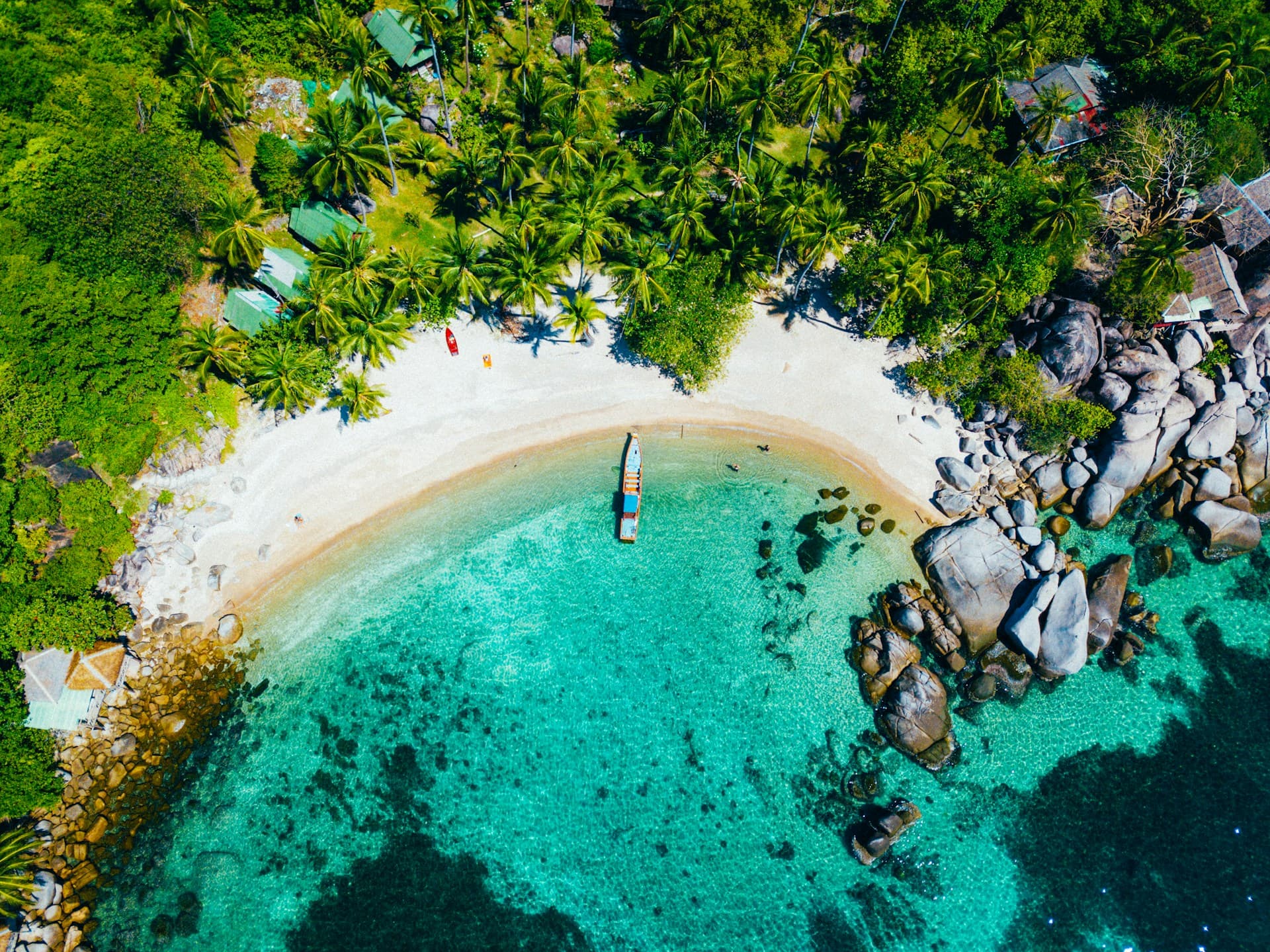
Thailand has far more beach variety than Bali, spread across the Andaman Sea (west coast) and the Gulf of Thailand (east coast).
Top Thailand Beach Experiences:
- Koh Lipe: Crystal-clear Andaman Sea water, excellent reef snorkeling right off Sunrise Beach. Small island, no cars. The closest thing to the Maldives in Thailand.
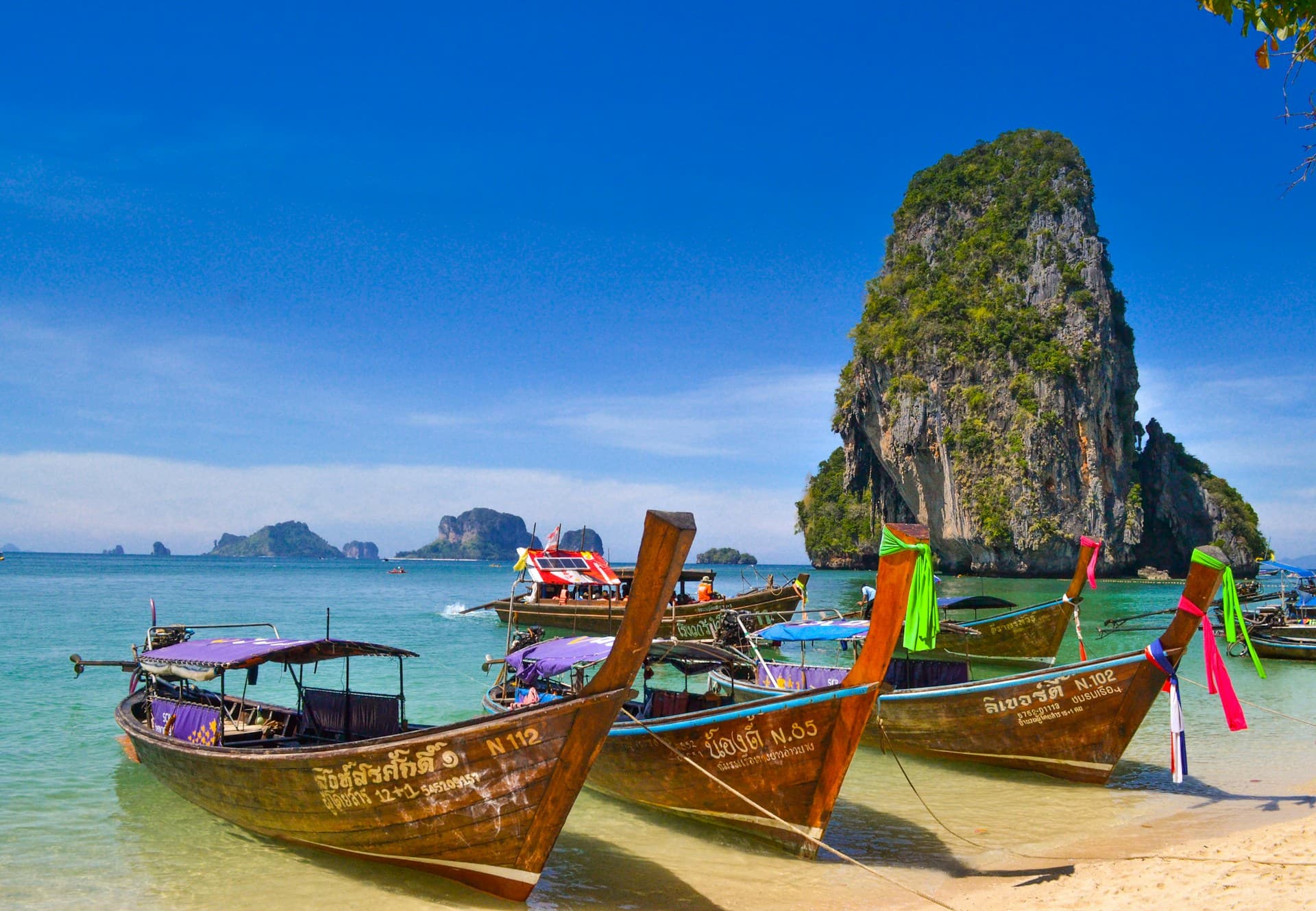
- Railay Beach, Krabi: Accessible only by longtail boat. Limestone cliffs, clear water, rock climbing. A natural amphitheater of a beach.
- Similan Islands: Open November-May only. National marine park with pristine diving and snorkeling. Day trips from Khao Lak ($60-80).
- Koh Samui: Family-friendly with luxury resorts. Chaweng Beach is busy and developed. Lamai is slightly quieter.
- Koh Phi Phi: Visually stunning but crowded. Maya Bay has reopened with daily visitor caps. Monkey Beach is worth the longtail ride.
- Koh Lanta: The relaxed alternative to Phuket. Long, quiet beaches, excellent diving, and a slower pace.
Verdict: Thailand wins for overall beach quality and diversity. If you want warm, calm, turquoise water for swimming and snorkeling, Thailand's Andaman coast is far superior to Bali's surf-pounded shores. Bali wins for surf culture and the dramatic cliff-meets-ocean aesthetics of the Bukit Peninsula.
Temples and Spiritual Culture
Bali's Temples
Bali is the only Hindu-majority region in Indonesia, and its temples are unlike anything else in Southeast Asia. Balinese Hinduism is a unique blend of Hindu, Buddhist, and animist traditions, and it permeates daily life -- offerings (canang sari) placed three times daily in front of every home, shop, and temple.
Must-Visit Temples:
- Tanah Lot: A sea temple on a rocky outcrop, iconic at sunset. Entry 60,000 IDR ($3.70 USD). Go 1-2 hours before sunset for the best experience.
- Uluwatu Temple: Clifftop temple with views of the Indian Ocean. The Kecak fire dance performed at sunset (70,000 IDR / $4.30 USD, daily at 6 PM) is one of Bali's most unforgettable cultural experiences.
- Tirta Empul: A water purification temple where both Balinese and visitors participate in a ritual bath under sacred spring spouts. Dress respectfully (sarong required, available for rental at the entrance).
- Besakih (Mother Temple): Bali's largest and holiest temple complex, on the slopes of Mount Agung. Grand but can be marred by aggressive guides. Go with a reputable tour or hire a trusted local guide.
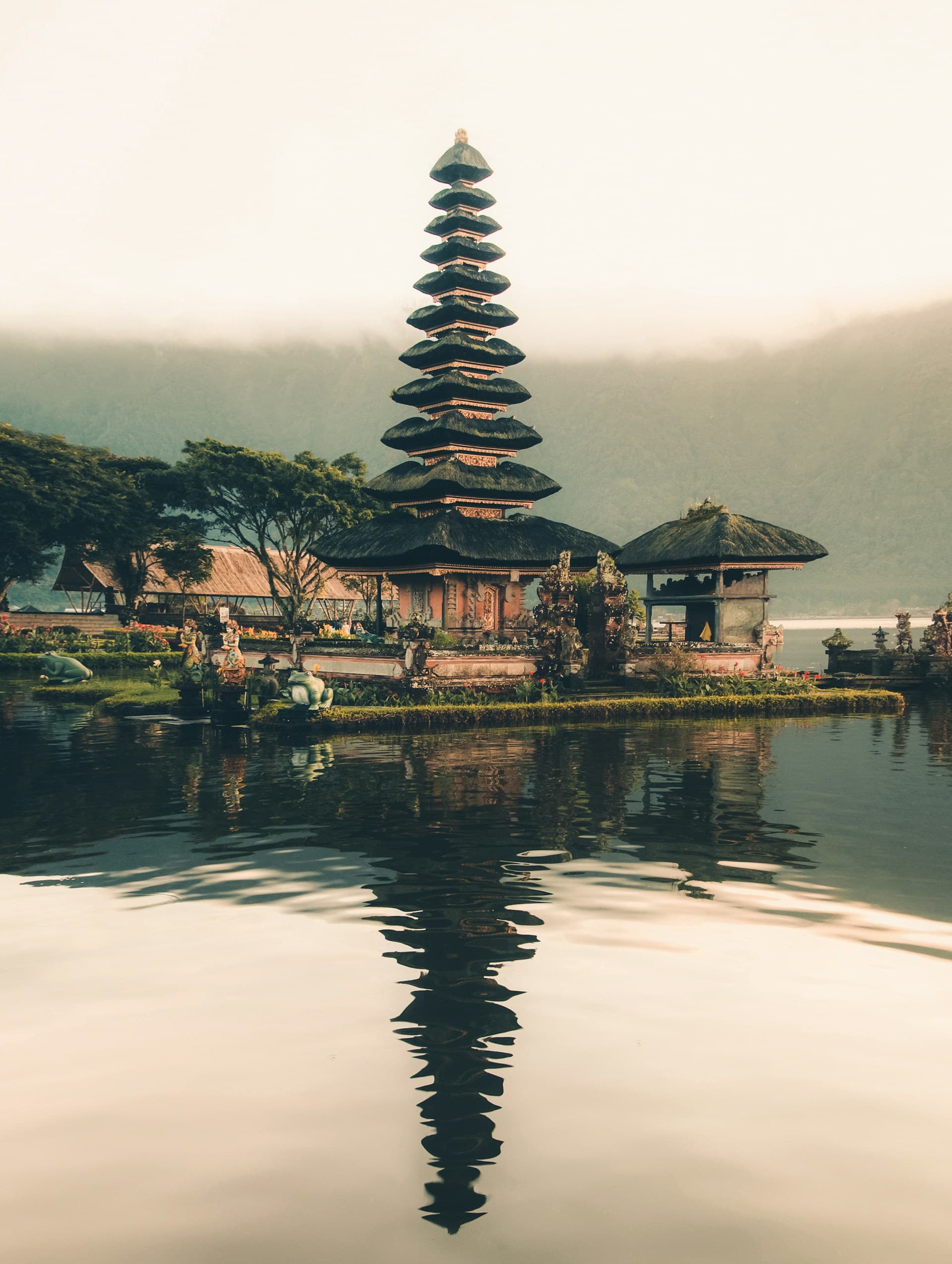
- Ulun Danu Beratan: The iconic "floating" temple on Lake Beratan in the highlands. Beautiful at dawn when mist rises from the lake.
Thailand's Temples
Thailand's Buddhist temples (wats) are grand, gilded, and numerous. Bangkok alone has over 400 temples. The scale and artistry of Thai temple architecture is extraordinary.
Must-Visit Temples:
- Wat Phra Kaew and Grand Palace, Bangkok: Thailand's most sacred temple, housing the Emerald Buddha. Entry 500 THB ($14 USD). Dress code strictly enforced (covered shoulders and knees).
- Wat Pho, Bangkok: Home to the 46-meter-long Reclining Buddha and the birthplace of traditional Thai massage. After viewing the temple, get a massage at the on-site school (260 THB / $7 USD for 30 minutes).
- Wat Arun, Bangkok: The Temple of Dawn, stunning at sunset when lit from across the Chao Phraya River. Entry 100 THB ($2.80 USD).
- Wat Phra That Doi Suthep, Chiang Mai: A golden temple on a mountain overlooking the city. 309 steps up or a cable car ride. Entry 30 THB ($0.85 USD).
- Ayutthaya Historical Park: Ruined temples of Thailand's former capital, an easy day trip from Bangkok (1.5 hours by train, 20-65 THB). Entry 50 THB per temple ($1.40 USD) or 220 THB for a combination ticket.
- Sukhothai Historical Park: Thailand's first capital, with elegant ruins spread across manicured grounds. Less visited than Ayutthaya but equally impressive.
Verdict: Both are exceptional but in different ways. Bali's temples are more intimate, more integrated into daily life, and more spiritually immersive. Thailand's temples are more architecturally grand and historically varied. If you want to feel a living spiritual tradition, Bali. If you want to see monumental religious art and architecture, Thailand.
Food
Bali's Food Scene
Balinese cuisine is part of the broader Indonesian culinary tradition, with its own distinctive flavors built around sambal (chili paste), coconut, and aromatic spice pastes (bumbu).
Must-Try Dishes:
- Nasi Goreng: Indonesian fried rice, the national dish. Served everywhere from street carts to five-star hotels.
- Babi Guling: Suckling pig roasted with a spice paste of turmeric, coriander, lemongrass, and chili. Ibu Oka in Ubud is the famous spot ($5-7 per plate), though locals debate whether it is still the best.
- Nasi Campur: Mixed rice plate with small portions of multiple dishes -- meat, vegetables, sambal, tempeh. A complete Balinese meal at a warung for $1.50-3.
- Lawar: A traditional dish of finely chopped meat, vegetables, grated coconut, and spices. Often served at ceremonies and special occasions.
- Sate Lilit: Balinese-style satay made with minced fish or pork wrapped around lemongrass sticks.
Bali's International Food Scene: Bali has developed an exceptional international dining scene, particularly in Seminyak, Canggu, and Ubud. Locavore (Ubud, tasting menu $60-90, book weeks ahead), Mozaic (Ubud, French-Indonesian fine dining), and Sarong (Seminyak, pan-Asian) represent the high end. The brunch and cafe culture in Canggu rivals Melbourne.
Thailand's Food Scene
Thai food is one of the world's great cuisines, and eating in Thailand is consistently ranked among the top travel food experiences globally.
Must-Try Dishes:
- Pad Thai: Stir-fried rice noodles with shrimp, egg, peanuts, and lime. Thip Samai in Bangkok is the famous spot (50-100 THB / $1.40-2.80).
- Som Tum: Green papaya salad. Spicy, sour, sweet, salty -- all in one dish. Specify your heat level unless you want to breathe fire.
- Khao Soi: Northern Thai coconut curry noodle soup. Best in Chiang Mai. Khao Soi Khun Yai is a revered spot.
- Tom Kha Gai: Coconut galangal chicken soup. Milder than Tom Yum but equally complex in flavor.
- Massaman Curry: Rich, mild curry with peanuts, potatoes, and your choice of protein.
- Mango Sticky Rice: The dessert that converted millions of tourists into Thai food obsessives. Peak mango season is March through May.
Street Food: Bangkok is the undisputed street food capital of the world. Yaowarat Road (Chinatown), the area around Victory Monument, and the stalls lining any major BTS station deliver exceptional food for $1-3 per dish.
Verdict: Thailand wins the food comparison convincingly. Thai cuisine has more depth, more regional variety, and a street food culture that is unmatched. Bali's food is good and improving (especially the international dining scene), but it does not reach Thailand's level.
Wellness and Yoga
Bali
Bali is the global epicenter of the wellness travel movement. Ubud, in particular, has become synonymous with yoga retreats, plant-based eating, meditation, sound healing, breathwork, and every other wellness modality you can name.
Key Wellness Experiences:
- Yoga Barn (Ubud): Bali's most famous yoga studio. Drop-in classes 130,000 IDR ($8 USD). Multiple styles, all levels. The schedule runs 10+ classes daily.
- The Practice (Canggu): Modern, beautifully designed studio popular with the digital nomad crowd. Drop-in 150,000 IDR ($9.25 USD).
- Fivelements Retreat (Mambal): High-end wellness resort focused on Balinese healing traditions. Multi-day programs start around $300 per night.
- COMO Shambhala Estate (Ubud): Luxury wellness resort set in a river valley. Holistic wellness programs starting at $500+ per night.
- Balinese Massage: Available everywhere from simple beach shacks ($7-10 for 1 hour) to luxury spas ($30-80 for 1 hour). The traditional Balinese massage combines gentle stretching, acupressure, and aromatherapy.
Thailand
Thailand's wellness scene is different in character -- more rooted in traditional Thai healing practices, Muay Thai fitness, and Buddhist meditation.
Key Wellness Experiences:
- Thai Massage: The gold standard of massage traditions. A temple Thai massage at Wat Pho costs 260-520 THB ($7-14.50 USD) for 30-60 minutes. Street-side massage shops throughout Thailand charge 200-400 THB ($5.60-11.20 USD) per hour.
- Muay Thai Training: Thailand's national martial art doubles as an incredible fitness experience. Training camps in Chiang Mai (Lanna Fighting, Santai Muay Thai) and Phuket (Tiger Muay Thai) offer drop-in sessions ($10-15) or multi-week training packages.
- Meditation Retreats: Wat Suan Mokkh (Surat Thani province) offers a famous 10-day silent meditation retreat on the 1st of every month (donation-based). Doi Suthep in Chiang Mai offers monk chats and meditation sessions.
- Koh Phangan: The island has evolved beyond the Full Moon Party into a significant wellness hub. Orion Healing (Srithanu), Samma Karuna, and the Sanctuary offer yoga, fasting, and detox programs.
Verdict: Bali wins for yoga and holistic wellness. The density and variety of wellness offerings in Ubud and Canggu is unmatched globally. Thailand wins for traditional healing (Thai massage), martial arts fitness, and Buddhist meditation.
Digital Nomad Infrastructure
Both destinations are top-tier digital nomad hubs.
Bali
- Canggu: The digital nomad capital of Southeast Asia. Coworking spaces include Dojo Bali (day pass $15-20), Outpost (day pass $22), and dozens of laptop-friendly cafes.
- Ubud: Quieter nomad scene. Hubud (day pass $18-22) is the landmark coworking space.
- Internet: Generally good in tourist areas (20-50 Mbps), but can be unreliable. Coworking spaces offer the most consistent connections.
- Cost of Living: A comfortable nomad life in Canggu costs $1,200-2,000 per month (villa room, coworking, food, motorbike, social life).
Thailand
- Chiang Mai: The original digital nomad hub. Punspace, CAMP (at Maya Mall, free with any purchase), and Heartspace offer excellent coworking. Cost of living is $800-1,500 per month for a comfortable lifestyle.
- Bangkok: More urban, more variety. The COMMON, Hubba, and True Digital Park. Higher cost of living ($1,200-2,500 per month) but access to a world-class city.
- Koh Lanta and Koh Phangan: Emerging nomad islands with growing coworking infrastructure.
- Internet: Generally excellent throughout Thailand. 4G/5G coverage is widespread. Thai SIM cards with unlimited data cost $10-15 per month.
Verdict: Close call. Bali (Canggu specifically) has the strongest nomad community and lifestyle. Thailand (Chiang Mai) offers better value and more reliable infrastructure. Bangkok beats both for the sheer quality of urban amenities.
Surfing vs Diving
Surfing
Bali: World-class. Uluwatu, Padang Padang, Keramas, Canggu, and Medewi offer breaks for every level. Bali's surf culture is deeply established, with board shapers, surf camps, and a year-round swell season. The dry season (April-October) brings the most consistent swells to the western/southern coasts. Board rentals $5-10 per day. Surf lessons $25-35 for 2 hours.
Thailand: Very limited. Phuket gets small, inconsistent surf during the monsoon season (May-October). Thailand is not a surf destination.
Verdict: Bali wins decisively for surfing. Not even close.
Diving
Bali: Very good diving, particularly at Nusa Penida (manta rays at Manta Point, the dramatic Mola Mola sunfish from July-October), Tulamben (the USAT Liberty shipwreck, accessible from shore), and Amed. PADI Open Water certification costs $300-400.
Thailand: Excellent and more varied. Koh Tao is one of the world's cheapest places to get PADI certified ($200-300). The Similan Islands and Richelieu Rock (November-May) offer world-class dive sites with whale sharks and manta rays. Koh Lanta and Koh Phi Phi add more options.
Verdict: Thailand has a slight edge for diving variety and value. Bali's manta ray and Mola Mola encounters are unique draws.
Rainy Seasons Compared
Bali
Bali's rainy season runs from November through March, with January and February typically being the wettest months. Rain usually falls in heavy afternoon downpours lasting 1-3 hours rather than all-day drizzle. Mornings are often clear. The rainy season brings:
- Lower prices (20-40% below peak)
- Fewer tourists
- Lush, vibrant green landscapes
- Higher humidity
- Some surf spots become better (eastern coast picks up swell)
Thailand
Thailand's rainy season is more complex because the country has two coasts:
- Andaman Coast (Phuket, Krabi, Koh Lipe): Rainy season May-October. Some islands and dive sites close.
- Gulf Coast (Koh Samui, Koh Phangan, Koh Tao): Rainy season October-December. These islands are the dry-season alternative when the west coast is wet.
- Bangkok and the North: Rainy season June-October.
This split means Thailand always has a dry coast available. If the Andaman side is wet, the Gulf side is dry, and vice versa.
Verdict: Thailand's staggered rainy seasons give it an advantage -- there is always a good-weather option. Bali's rainy season affects the entire island, though it is still very visitable.
Visa Comparison
| Factor | Bali (Indonesia) | Thailand |
|---|---|---|
| Visa-free duration | 30 days (most nationalities) | 30-60 days (varies by nationality) |
| Extension | Extendable to 60 days (one 30-day extension, $35 USD) | 30-day extension available ($53 USD) at immigration |
| Visa on arrival | Available, 30 days, $35 USD | Available for some nationalities |
| Long-term options | B211A visa (60-180 days, agent required), KITAS | Various visa types, Long-Term Resident visa |
| Digital nomad visa | Currently in development | Long-Term Resident visa, Destination Thailand Visa |
Plan Your Trip with TripGenie
Whether you choose Bali's spiritual calm or Thailand's dynamic diversity, TripGenie can build a day-by-day itinerary that handles the logistics. For Bali, this means sequencing your Ubud wellness days, Uluwatu surf sessions, and Nusa Penida day trips to minimize driving on the island's congested roads. For Thailand, it means routing between Bangkok, Chiang Mai, and your chosen islands with optimal flight and ferry connections. Input your dates, interests, and budget, and get a plan tailored to your style.
The Bottom Line: When Each Destination Wins
Choose Bali If...
- Wellness, yoga, and spiritual experiences are priorities
- Surfing is a major motivation
- You want a single, compact destination you can explore deeply
- The cafe and brunch culture appeals to you
- You are drawn to Balinese Hindu culture and ceremonies
- You want luxury villas at reasonable prices
- You prefer a more intimate, island-scale experience
Choose Thailand If...
- Food is your primary travel motivation
- You want diverse experiences (cities, mountains, islands, temples)
- Nightlife matters
- Budget is a major concern (Thailand is 10-20% cheaper)
- You want warm, swimmable beaches with clear water
- You are a first-time Asia traveler (Thailand's infrastructure is more forgiving)
- You want to combine a city experience (Bangkok) with beach time
- Diving is a priority
Choose Both If...
You have three to four weeks. A natural route: fly into Bangkok (3-4 days), train to Chiang Mai (3-4 days), fly to a Thai island (4-5 days), then fly from Bangkok to Bali ($100-200 one-way on AirAsia or Thai Lion Air, 3.5-4 hours), and spend 7-10 days exploring Bali's different regions.
Both destinations have earned their reputations. Bali will quiet your mind and feed your soul. Thailand will thrill your palate and expand your horizons. Either way, you win.
Topics

Written by
TripGenie Team
The TripGenie team is passionate about making travel planning effortless with AI. We combine travel expertise with cutting-edge technology to help you explore the world.
@tripgenieGet Travel Tips Delivered Weekly
Get our best travel tips, destination guides, and exclusive deals delivered straight to your inbox every week.
No spam, ever. Unsubscribe anytime.