
Thailand is the gateway to Southeast Asia for millions of travelers every year, and with good reason. Ancient temples, extraordinary street food, tropical islands, mountain jungles, and a culture of warmth and hospitality make it one of the world's most rewarding destinations.
But Thailand is a large country with significant regional climate differences. The best time to visit Bangkok is not the same as the best time for Koh Samui, and the ideal window for trekking in Chiang Mai does not overlap perfectly with island-hopping in the Andaman Sea.
This guide breaks it all down so you can plan the right trip at the right time.
Thailand's Three Seasons
Thailand has three distinct seasons, though they vary by region:
- Cool/Dry Season (November-February): The most comfortable weather across most of the country. Lower humidity, blue skies, temperatures of 25-32C in the south and 15-25C in the north. This is peak tourist season.
- Hot Season (March-May): Intense heat, especially in Bangkok and the central plains (35-40C). Humidity builds through the season. Songkran (Thai New Year water festival) falls in April.
- Rainy/Monsoon Season (June-October): Southwest monsoon brings rain to most of the country. Rainfall varies dramatically by region. The east coast islands (Koh Samui, Koh Phangan) have a different monsoon pattern and peak later (October-December).
Region-by-Region Breakdown
Bangkok and Central Thailand
Best time: November-February
Bangkok is hot year-round, but the cool season brings temperatures down to a relatively comfortable 25-32C with low humidity and minimal rain. This is the most pleasant time to explore temples, street food markets, and the city's vibrant neighborhoods.
Season by season:
- November-February: Best weather. Cool mornings, comfortable days. Peak tourist season with higher prices. The Grand Palace, Wat Pho, and Chatuchak Weekend Market are at their most crowded.
- March-May: Brutally hot. April regularly hits 38-40C with high humidity. Bangkok can feel oppressive. However, Songkran (April 13-15) transforms the city into a massive water fight — if you can handle the heat, it is one of Southeast Asia's most exhilarating festivals.
- June-October: Afternoon thunderstorms are common but rarely last more than 1-2 hours. Mornings are usually clear. Prices drop, tourist numbers thin out, and the city remains fully functional. This is an underrated time to visit Bangkok.
Practical tip: Bangkok traffic is bad year-round, but it is notably worse during heavy rain. Use the BTS Skytrain and MRT metro whenever possible.
Northern Thailand (Chiang Mai, Chiang Rai, Pai)
Best time: November-February
The north has the most dramatic seasonal variation in Thailand. Cool season nights in Chiang Mai can drop to 12-15C, and mountain areas like Doi Inthanon can approach freezing.
Season by season:
- November-February: Ideal conditions. Cool, dry weather is perfect for temple-hopping, trekking, and exploring night markets. The Yi Peng Lantern Festival in Chiang Mai (November, date varies) is one of Asia's most magical events — thousands of sky lanterns released simultaneously.
- March-May: The burning season. Farmers clear land by burning fields, creating thick haze that obscures mountain views and degrades air quality significantly. March-April air quality in Chiang Mai can reach hazardous levels. Avoid the north in March-April if you have respiratory sensitivities.
- June-October: Green season. The rains clear the air, the landscape turns brilliantly green, and waterfalls are at full force. Trekking is still possible but trails can be muddy and leeches are common. Prices are at their lowest.
Practical tip: If you visit in November-February, pack layers for evenings, especially in Chiang Rai and Pai where temperatures drop further than in Chiang Mai.
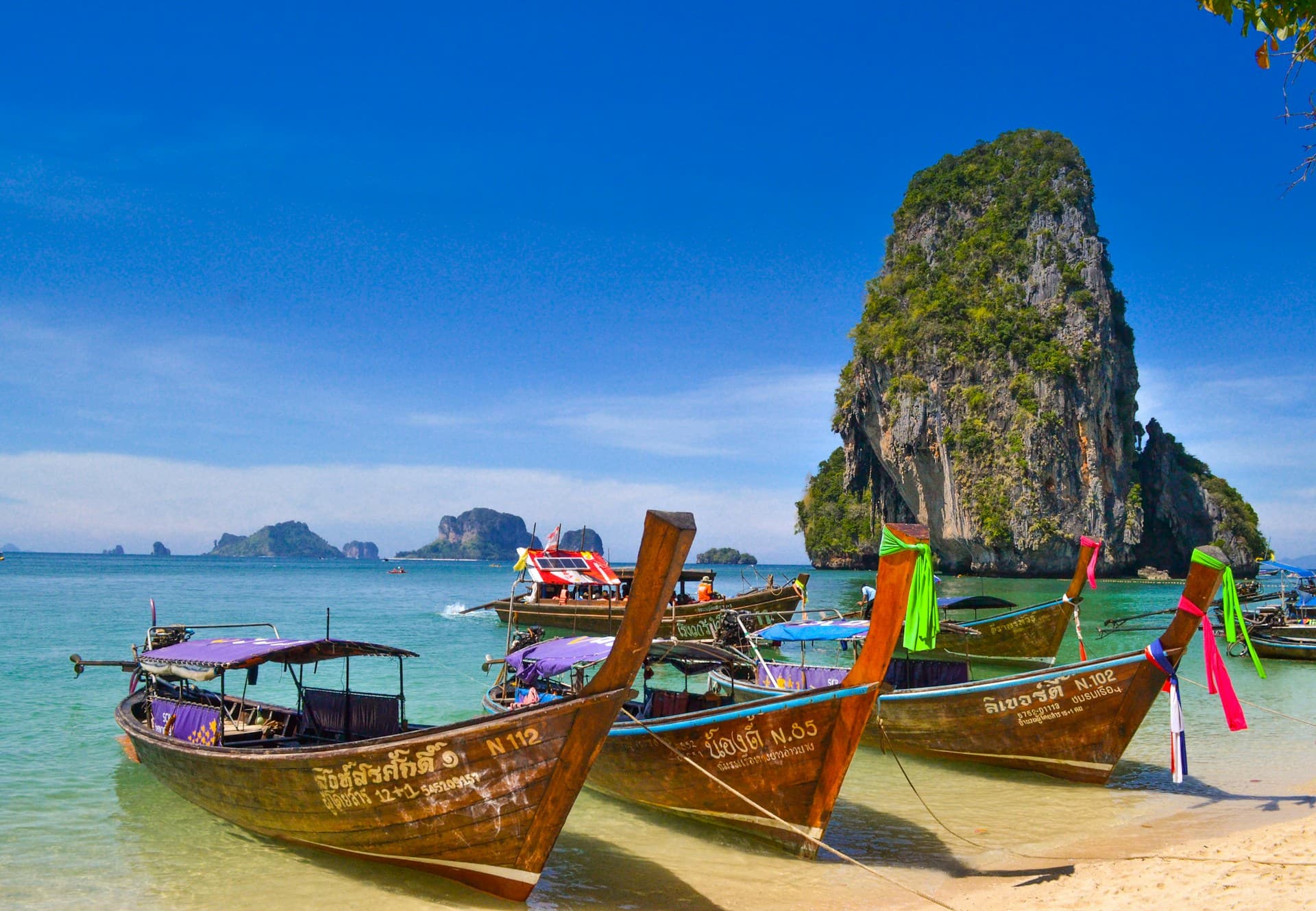
Andaman Coast (Phuket, Krabi, Koh Phi Phi, Koh Lanta)
Best time: November-April
The Andaman coast on Thailand's southwest side follows the standard monsoon pattern. The dry season delivers postcard-perfect conditions.
Season by season:
- November-April: Dry season. Crystal-clear water, calm seas, brilliant sunshine. December-January is peak season with highest prices and biggest crowds. February-April offers slightly fewer tourists with equally good weather.
- May-October: Monsoon season. Rain is more frequent and intense, seas are rougher, and some island boat services are reduced or cancelled. However, this does not mean it rains all day. Many days have sunshine in the morning with storms in the afternoon. Accommodation is 30-60% cheaper.
Important nuance: May and October are transition months that can be surprisingly good — you get lower prices with often decent weather. June-September is the core monsoon period.
Practical tip: Similan Islands and Surin Islands national parks close completely from mid-May to mid-October due to rough seas. Plan diving trips to these areas for November-April only.
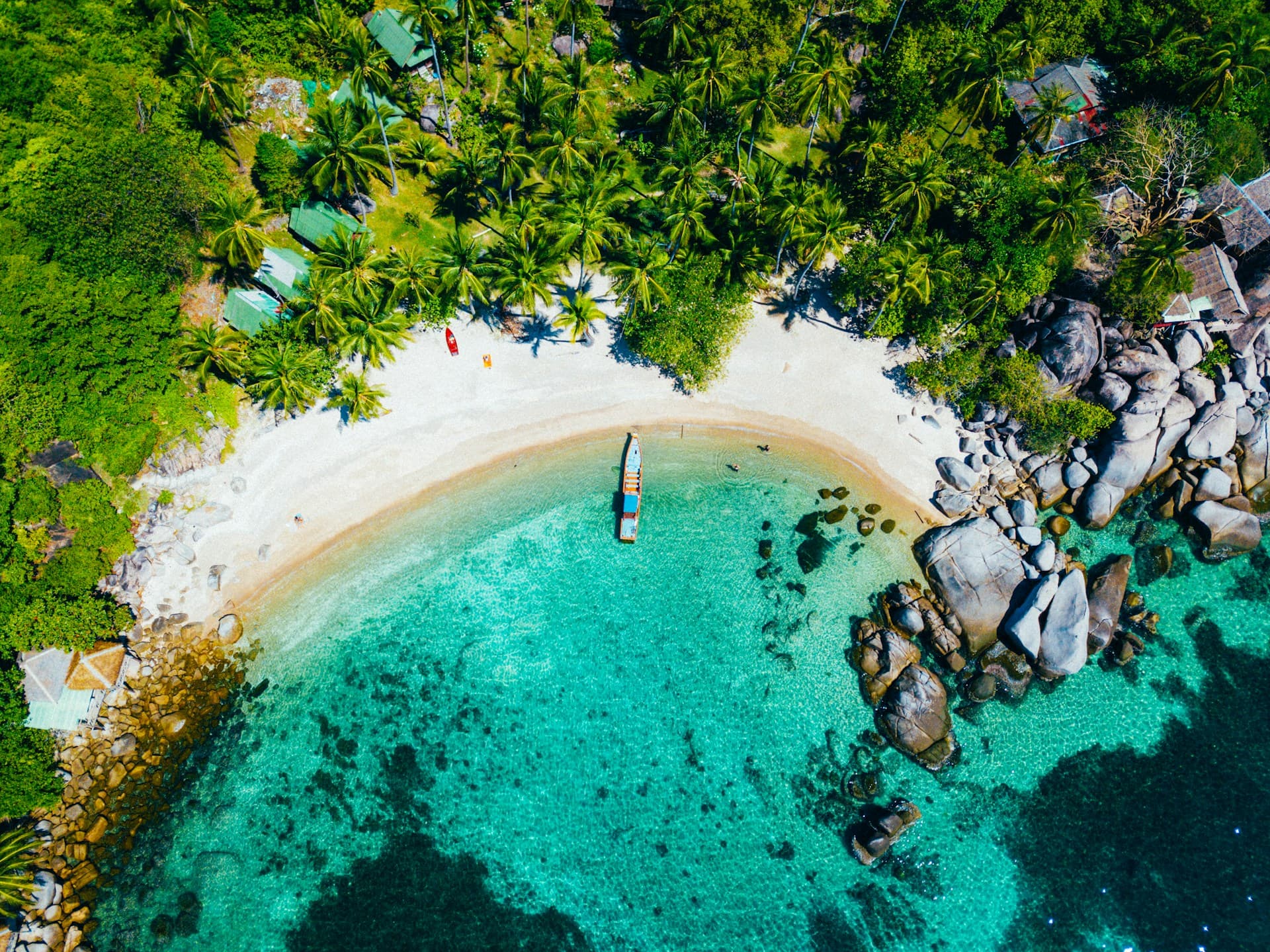
Gulf Coast (Koh Samui, Koh Phangan, Koh Tao)
Best time: February-June (differs from the rest of Thailand)
This is the critical regional difference that trips up many travelers. The Gulf coast follows a different monsoon pattern than the Andaman coast.
Season by season:
- February-June: The best weather window. Calm seas, good visibility for diving (especially at Koh Tao), warm temperatures, and less rain than other times.
- July-September: Brief showers but generally manageable. Full Moon Parties on Koh Phangan continue year-round.
- October-December: The Gulf's rainy season peaks. November is often the wettest month, with heavy rainfall, rough seas, and occasional flooding. This is when the Gulf coast is at its least appealing while the rest of Thailand is entering dry season.
- January: Transition month. Weather improves but seas can still be choppy.
Practical tip: If you want to combine Bangkok and temples with Gulf islands, February-April is the best overlap period where both regions have good weather.
Isaan (Northeastern Thailand)
Best time: November-February
Isaan is Thailand's least-visited region by international tourists, which is a shame — it offers some of the most authentic Thai cultural experiences, extraordinary food, and important Khmer ruins.
Highlights:
- Phimai and Phanom Rung are Khmer temple complexes that rival Angkor in beauty if not scale.
- Isaan cuisine is the backbone of Thai street food — som tam (papaya salad), larb (minced meat salad), and sticky rice originated here.
- November-February weather is pleasant (20-30C). The hot season (March-May) is punishing, with temperatures regularly exceeding 40C.
Major Festivals and Events
Thailand's festivals are reason enough to plan a trip. Here are the highlights.
Songkran (Thai New Year) — April 13-15
Songkran is Thailand's most famous festival — a three-day nationwide water fight that celebrates the Thai New Year. What began as a gentle tradition of pouring water over elders' hands has evolved into the world's biggest water fight.
What to expect:
- Water guns, buckets, hoses, and trucks equipped with barrels of water roam the streets
- Nobody is spared — tourists are primary targets
- The biggest celebrations are in Bangkok (Khao San Road, Silom Road), Chiang Mai (the moat area), and Pattaya
- Chiang Mai arguably has the best Songkran, running for up to six days
Practical tips:
- Waterproof your phone and wallet (dry bags are essential)
- The water is often ice-cold — brace yourself
- Avoid riding a motorbike during Songkran — it is dangerous when everyone is throwing water
- Transport can be disrupted; book internal flights or trains well in advance
Loy Krathong — November (full moon)
Loy Krathong is one of Thailand's most beautiful festivals. On the night of the full moon in November, people release small floating offerings (krathong) made of banana leaves, flowers, and candles onto rivers and waterways.
Best places to experience it:
- Sukhothai — the most traditional and atmospheric celebration, held in the historical park
- Chiang Mai — combines Loy Krathong with the Yi Peng Lantern Festival, where thousands of paper lanterns are released into the sky simultaneously
- Bangkok — celebrations along the Chao Phraya River and in Lumphini Park
Practical tip: The Yi Peng lantern release in Chiang Mai has become so popular that there are now ticketed events with guaranteed viewing. Book well in advance.
Full Moon Parties — Monthly, Koh Phangan
The legendary Full Moon Party on Haad Rin beach draws 10,000-30,000 revelers every month for an all-night beach party with fire shows, neon body paint, and bucket cocktails.
What to know:
- Runs year-round, including during rainy season
- Half Moon and Black Moon parties offer smaller alternatives
- Book accommodation on Koh Phangan well in advance for Full Moon dates
- Transport to and from the party is chaotic — arrange your boat or taxi before midnight
- Exercise caution with drinks and valuables
Other Notable Festivals
- Chinese New Year (January/February): Big celebrations in Bangkok's Chinatown (Yaowarat Road) and Phuket
- Vegetarian Festival (October): Nine days of extreme rituals in Phuket — face piercings, firewalking, and plant-based food stalls across the island
- Phi Ta Khon (Ghost Festival, June/July): Colorful masked parade in Dan Sai, Loei province — one of Thailand's most unique and photogenic festivals
- Royal Ploughing Ceremony (May): Ancient Brahmin ceremony at Sanam Luang in Bangkok marking the beginning of the rice-growing season
The Monsoon Reality Check
Many travelers avoid Thailand during rainy season, and this is often a mistake. Here is the reality.
What Monsoon Season Actually Looks Like
- It does not rain all day. The typical pattern is clear mornings followed by a 1-3 hour downpour in the afternoon, then clearing again by evening.
- Temperatures remain warm. You are not dealing with cold, grey European rain. Tropical rain comes in intense bursts with warm temperatures.
- The landscape is at its most beautiful. Waterfalls are thundering, rice paddies are emerald green, and everything feels lush and alive.
- Prices drop dramatically. Hotels offer 30-60% discounts. Flights are cheaper. Attractions are uncrowded.
When Monsoon Season IS a Problem
- Island hopping becomes difficult. Rough seas can cancel boats, and some islands reduce or suspend ferry services.
- Diving visibility decreases on both coasts during their respective monsoon periods.
- Flash flooding can occur in Bangkok and low-lying areas after sustained heavy rain.
- Landslides are possible on mountain roads in the north during the wettest months.
- Some national parks close or restrict access to waterfalls and trails.
The Smart Monsoon Strategy
Visit during the shoulder months — May, June, October, or early November. You get many of the price benefits of low season with significantly less rain than the core monsoon months of August and September.
Budget Comparison by Season
Your budget will stretch further in certain months.
| Category | Peak Season (Nov-Feb) | Shoulder (May-Jun, Oct) | Low Season (Jul-Sep) |
|---|---|---|---|
| Beach resort | THB 3,000-8,000/night | THB 1,500-4,000/night | THB 1,000-3,000/night |
| Guesthouse | THB 600-1,200/night | THB 400-800/night | THB 300-600/night |
| Internal flight | THB 1,500-4,000 | THB 800-2,000 | THB 600-1,500 |
| Street food meal | THB 40-80 (year-round) | THB 40-80 | THB 40-80 |
| Restaurant meal | THB 150-400 | THB 150-400 | THB 150-400 |
Note: Food prices remain remarkably consistent year-round. The biggest savings in low season come from accommodation and transport.
Suggested Itinerary Timing
Classic Two-Week Thailand Trip
Best timing: November or February
- Bangkok (3 nights) - Chiang Mai (3 nights) - Krabi/Railay (3 nights) - Koh Phi Phi or Koh Lanta (3 nights)
Temple and Culture Focus
Best timing: November-January
- Bangkok (3 nights) - Ayutthaya day trip - Sukhothai (2 nights) - Chiang Mai (4 nights) - Chiang Rai (2 nights)
Island Hopping Focus
Best timing: February-April
- Bangkok (2 nights) - Koh Samui (3 nights) - Koh Phangan (2 nights) - Koh Tao (3 nights)
This timing catches the Gulf coast in its best weather window.
Songkran Experience
Timing: April 10-20
- Bangkok for pre-Songkran atmosphere (2 nights) - Chiang Mai for the main event (4 nights) - Fly south to Krabi or Phuket for beach recovery (4 nights)
Final Recommendations
Overall best time: November to February for the widest range of favorable conditions across the country.
Best value: May, June, and October. Shoulder season pricing with weather that is often better than its reputation suggests.
Avoid: March-April in the north (burning season and extreme heat) and November on the Gulf coast (peak monsoon).
Best festival timing: April for Songkran, November for Loy Krathong/Yi Peng.
Thailand rewards visitors in every season — the key is matching your destination to the right time. Plan by region, stay flexible, and you will find that even the "wrong" time of year has something extraordinary to offer.
Topics

Written by
TripGenie Team
The TripGenie team is passionate about making travel planning effortless with AI. We combine travel expertise with cutting-edge technology to help you explore the world.
@tripgenieGet Travel Tips Delivered Weekly
Get our best travel tips, destination guides, and exclusive deals delivered straight to your inbox every week.
No spam, ever. Unsubscribe anytime.