
Adventure travel sits on a spectrum. At one end, there is a gentle hike through a national park. At the other, there is jumping off a bridge attached to a rubber band, or free-diving into a blue hole, or paragliding off a mountain into a valley thousands of feet below. This guide lives at the thrilling end of that spectrum — twenty destinations where the primary draw is an adrenaline-pumping, boundary-pushing, story-generating adventure.
Every destination includes the specific adventure that makes it worth the trip, the difficulty level (so you know what you are getting into), the cost, the best time to go, and recommended operators who will keep you alive and grinning.
1. Queenstown, New Zealand — Bungee Jumping
The adventure: Queenstown invented commercial bungee jumping, and it remains the world's best place to throw yourself off a perfectly good platform.
The options:
- Kawarau Bridge Bungee (43m): The original. A.J. Hackett launched commercial bungee here in 1988. You can touch the river on the way down. NZD $235 ($140).
- Nevis Bungee (134m): The big one. New Zealand's highest bungee — an 8.5-second freefall from a suspended pod above the Nevis River canyon. NZD $300 ($180).
- Ledge Bungee (47m): An urban bungee from a platform high above Queenstown. You run off the ledge, which adds a different kind of terror. NZD $235 ($140).
Difficulty: Low (physical) / High (psychological). No fitness required — just the willingness to jump.
Best time: Year-round. Summer (December-February) for warmth; winter for the snow-capped mountain backdrop.
Operator: AJ Hackett Bungy (the pioneers, excellent safety record).
Bonus adventures in Queenstown: Skydiving (15,000 ft over the Remarkables, $350), jet boating on the Shotover River ($160), canyon swinging, and luge.
2. Nepal — Himalayan Trekking
The adventure: Trekking in Nepal is not just hiking — it is a journey through the highest mountain landscape on Earth, past ancient monasteries, through rhododendron forests, and into a world of ice and rock where the scale defies comprehension.
The options:
- Everest Base Camp Trek (12-16 days): The classic. Follow the Khumbu Valley to 5,364m at the foot of the world's tallest mountain. You do not need to be a mountaineer, but you do need to be fit and prepared for altitude.
- Annapurna Circuit (12-21 days): A full loop around the Annapurna massif, crossing the Thorung La pass at 5,416m. More varied terrain and culture than EBC.
- Langtang Valley Trek (7-10 days): Less crowded, closer to Kathmandu, and deeply rewarding. The valley was heavily affected by the 2015 earthquake but has rebuilt.
- Manaslu Circuit (14-18 days): The adventure trekker's choice — fewer trekkers, restricted-area permits, and spectacular mountain views. Requires a guide and group of minimum two.
Difficulty: Moderate to High. The altitude is the main challenge, not the technical terrain. Acclimatization days are critical — do not skip them.
Cost: $1,500-4,000 for a guided trek including permits, accommodation, food, and guide/porter. Independent trekking on the Annapurna and Langtang routes is possible for $30-50/day.
Best time: October-November (post-monsoon, clear skies) and March-May (pre-monsoon, rhododendrons in bloom).
Operators: Himalayan Glacier, Adventure Consultants, and Intrepid Travel are reputable options. Hiring a local guide through your Kathmandu hotel or a trekking agency in Thamel is easy and supports the local economy directly.
3. Raja Ampat, Indonesia — Scuba Diving
The adventure: Raja Ampat, off the northwest tip of Papua, has the highest marine biodiversity on Earth. More species of fish and coral live here than anywhere else in the ocean. Diving here is like floating through a David Attenborough documentary.
What you will see: Manta rays, wobbegong sharks, pygmy seahorses, massive schools of barracuda and jacks, pristine coral walls, and an almost absurd density of marine life.
Key dive sites:
- Cape Kri: Holds the record for the most fish species counted on a single dive (374 species).
- Manta Sandy: A cleaning station where manta rays glide overhead.
- The Passage: A narrow channel between two islands with soft coral walls and current-swept dives.
Difficulty: Intermediate to Advanced. Strong currents are common. Open Water certification is the minimum; Advanced Open Water is recommended. Some sites are suitable for snorkelers.
Cost: Liveaboard trips from $2,500-5,000 for 7-10 days including diving, meals, and accommodation. Land-based stays at homestays and dive lodges from $100-200/day.
Best time: October to April (calmest seas, best visibility). Manta season peaks in November-April.
Operators: Papua Explorers, Meridian Adventure Dive, and Coralia Liveaboard.
4. Interlaken, Switzerland — Paragliding
The adventure: Launching off a mountain and soaring over the Swiss Alps, with views of the Eiger, Monch, and Jungfrau peaks and Lake Thun and Lake Brienz far below. Tandem paragliding in Interlaken is one of the most accessible high-adrenaline experiences in the world — no experience required, and the scenery is unmatched.
What to expect: You hike to a launch site (15-20 minutes), get strapped to a tandem pilot, run off the edge of a mountain, and fly for 15-30 minutes depending on thermal conditions. Most pilots offer an acrobatic option (spirals and wingovers) for the brave.
Difficulty: Low. You literally just run when told to run. The pilot does everything else.
Cost: CHF 170-220 ($190-245) for a tandem flight including photos/video.
Best time: May to October. Summer thermals provide the longest flights.
Operators: Paragliding Interlaken, Skywings, and Twin Paragliding.
Bonus adventures in Interlaken: Canyoning in the Saxeten Valley (CHF 135), skydiving over the Alps (CHF 380), white-water rafting on the Lutschine River, and via ferrata on the Murren cliffs.
5. Mentawai Islands, Indonesia — Surfing
The adventure: The Mentawai Islands, off the west coast of Sumatra, offer some of the most perfect waves on Earth. Consistent swells wrap around coral reefs to create hollow, powerful, picture-perfect barrels that have earned the archipelago a near-mythical reputation in the surfing world.
Key breaks:
- Lance's Right (HT's): A fast, hollow right-hander that is widely considered one of the best waves in the world.
- Macaronis: A left-hand point break with long, makeable barrels. One of the most fun waves in the Mentawais.
- Telescopes: A powerful left with a heavy inside section. Not for beginners.
- Playgrounds: As the name suggests, a more forgiving wave suitable for intermediates.
Difficulty: Intermediate to Expert. Most Mentawai waves break over shallow coral reef. This is not a beginner destination. Solid intermediate surfers can enjoy some breaks, but the premium waves demand experience.
Cost: Surf charter boats from $150-350/day including meals and boat access to remote breaks. Land camps from $80-200/day.
Best time: March to November (consistent southwest swell). The prime window is May to September.
Operators: Kandui Villas, The Perfect Wave (booking agent for multiple boats and camps), and Hollow Trees Resort.
6. Azores, Portugal — Canyoning
The adventure: The Azores — a remote Portuguese archipelago in the mid-Atlantic — are a canyoning paradise. Volcanic geology has carved deep gorges with waterfalls, natural slides, and plunge pools through lush subtropical terrain.
What canyoning involves: Rappelling down waterfalls, jumping into deep pools, sliding down natural rock chutes, and swimming through narrow gorges. You wear a wetsuit, helmet, and harness; the guide handles the ropes.
Best canyons:
- Ribeira dos Caldeiroes (Sao Miguel): A beginner-friendly canyon with multiple rappels and jumps.
- Ribeira Funda (Flores): An advanced canyon with spectacular waterfalls on the most remote island.
- Cascata do Salto do Cabrito (Sao Miguel): Rappelling down a 40m waterfall.
Difficulty: Beginner to Advanced, depending on the canyon. No prior experience needed for introductory routes. You should be comfortable in water and not afraid of heights.
Cost: Half-day canyoning from 50-80 euros. Full-day advanced routes from 80-130 euros.
Best time: June to September (warmest water and best weather).
Operators: Azores Adventure Islands, Picos de Aventura, and Futurismo.
7. Queenstown/Franz Josef, New Zealand — Glacier Hiking
The adventure: Walking on (and through) a living glacier — ancient blue ice, crevasses, and ice caves — in one of the most dramatic mountain settings in the world.
Options:
- Franz Josef Glacier Heli-Hike: A helicopter flight onto the glacier followed by a guided walk through ice formations, crevasses, and blue ice caves. The only way to access the glacier (ground access was closed due to retreat). NZD $499 ($300).
- Fox Glacier: Similar heli-hike experience on the neighboring glacier. NZD $479 ($290).
- Rob Roy Glacier Track (Mt Aspiring National Park): A day hike (3-4 hours return) to a viewpoint below a hanging glacier with waterfalls cascading off the ice. Free.
Difficulty: Low to Moderate. Heli-hikes require basic fitness but no technical skills — crampons and equipment are provided. The Rob Roy track is a moderate day hike.
Best time: Year-round for heli-hikes (conditions permitting). Summer (November-March) for the Rob Roy Track.
Operators: Franz Josef Glacier Guides and Fox Glacier Guiding.
8. Victoria Falls, Zambia/Zimbabwe — White-Water Rafting
The adventure: The Zambezi River below Victoria Falls produces some of the most intense commercially raftable white water on Earth. Grade 5 rapids with names like "The Washing Machine," "Oblivion," and "The Devil's Toilet Bowl" give you an idea of what to expect.
What to expect: A full-day trip covers 25 km and 20+ rapids, including multiple Grade 5 sections where flipping the raft is a genuine possibility (and common occurrence). You will be exhausted, bruised, and euphoric.
Difficulty: High. You should be a confident swimmer and prepared for rough water. No prior rafting experience is strictly necessary, but it helps. The exit hike up the gorge at the end of the day is steep and exhausting.
Cost: $150-180 for a full-day trip including lunch and drinks.
Best time: August to December (low water, biggest rapids). The river may be too high and dangerous to raft during peak flood season (March-May).
Operators: Safari Par Excellence, Wild Horizons, and Raft Extreme.
Bonus: Bungee jumping from the Victoria Falls Bridge (111m, $160) and the Devil's Pool — a natural infinity pool at the very edge of the falls (Zambian side, September-December, $100).
9. Chamonix, France — Mountaineering and Trail Running
The adventure: Chamonix sits at the base of Mont Blanc (4,808m), Western Europe's highest peak. The town is a mecca for mountaineering, trail running, and alpine climbing.
Adventures:
- Mont Blanc summit: A 2-3 day guided ascent via the Gouter Route. Requires prior mountain experience, excellent fitness, and altitude acclimatization. Guide fees from 1,500-2,500 euros.
- Aiguille du Midi: A cable car to 3,842m with a glass viewing platform (Pas dans le Vide — "Step into the Void") and access to the Vallee Blanche glacier descent on skis.
- UTMB (Ultra-Trail du Mont-Blanc): The world's most famous ultra-marathon — 171 km around Mont Blanc through France, Italy, and Switzerland. Held in late August.
- Mer de Glace: France's largest glacier, accessible by the Montenvers railway. Glacier trekking tours available.
Difficulty: Moderate (cable car and glacier walks) to Extreme (Mont Blanc summit, UTMB).
Best time: June to September for mountaineering. December to April for skiing.
Operators: Compagnie des Guides de Chamonix (founded 1821, the world's oldest mountain guide company).
10. Tulum/Yucatan, Mexico — Cenote Diving
The adventure: Diving (or snorkeling) in cenotes — natural sinkholes filled with crystal-clear freshwater that connect to an underground river system spanning thousands of kilometers beneath the Yucatan Peninsula.
Key cenotes:
- Dos Ojos: Two connected sinkholes with cavern diving routes through stalactite-filled chambers. Halocline effects (where fresh and salt water meet) create surreal visual distortions.
- The Pit (El Pit): A 30m-deep cenote with light beams penetrating the water in the morning — one of the most photographed dive sites in the world.
- Gran Cenote: Excellent for snorkeling and introductory cavern dives. Crystal visibility, turtles, and stalactite formations.
- Angelita: A deeper cenote with a "underwater river" — a hydrogen sulfide layer that creates the illusion of a river flowing at 30m depth.
Difficulty: Snorkeling — Easy. Cavern diving — Intermediate (Open Water certified). Full cave diving — Expert (requires cave diving certification).
Cost: Cavern dive (2 tanks) from $120-180. Snorkeling from $40-60. Cave diving courses from $500+.
Best time: Year-round. Cenote water temperature is a constant 24-25C.
Operators: Dive Cenotes Mexico, Xibalba Dive Center, and Pro Dive Mexico.
11. Moab, Utah, USA — Rock Climbing and Canyoneering
The adventure: Moab's red-rock desert landscape offers world-class climbing on sandstone towers, walls, and cracks, plus canyoneering through narrow slot canyons.
Key experiences:
- Climbing at Indian Creek: Perfect parallel cracks in sandstone walls. A crack-climbing mecca.
- Fisher Towers: Multi-pitch desert tower climbing with exposure and soft rock that demands attention.
- Canyoneering in Robbers Roost: Rappelling through narrow, sculpted sandstone slot canyons.
- Mountain biking the Slickrock Trail: A legendary 19 km loop on petrified sand dunes.
Difficulty: Moderate to Expert. Guided introductory climbing is available. Serious routes require experience.
Cost: Guided climbing day from $250-400. Canyoneering from $200-350. Mountain bike rental from $50/day.
Best time: March to May and September to November. Summer exceeds 40C.
12. Zambia — Walking Safaris
The adventure: Walking through the African bush on foot, with armed guides, tracking wildlife by footprint, scat, and sound. Walking safaris originated in Zambia's South Luangwa National Park and remain the most intimate way to experience wild Africa.
What to expect: Multi-day walking safaris (3-5 days) move between mobile camps. You walk 10-15 km per day, encountering elephants, buffalo, hippos, and predators at ground level — an entirely different experience from a vehicle.
Difficulty: Moderate. Good fitness required for daily walking in heat. No technical skills needed.
Cost: $500-1,000/day all-inclusive (accommodation, meals, guide, park fees).
Best time: June to October (dry season, animals concentrate around water).
Operators: Robin Pope Safaris, Norman Carr Safaris, and Remote Africa Safaris.
13. Trolltunga, Norway — Cliff Hiking
The adventure: A 28 km round-trip hike to a horizontal rock formation jutting out over a 700m drop above Lake Ringedalsvatnet. The famous photograph — a person standing on the narrow rock tongue with nothing below — is one of the most iconic adventure images in the world.
Difficulty: Moderate to High. The hike is long (10-12 hours round trip) and involves significant elevation gain (800m). No technical climbing required, but fitness and preparation are essential.
Cost: Free (self-guided) or 800-1,500 NOK ($75-140) for a guided hike.
Best time: June to September. The trail is closed in winter except for guided winter expeditions.
14. Iguazu Falls, Argentina/Brazil — Boat Into the Falls
The adventure: The Gran Aventura boat ride takes you directly under the cascading water of Iguazu Falls. You will be completely drenched — an exhilarating, thundering, sensory-overload experience.
Cost: ARS equivalent of $45-60 including the zodiac boat ride and a jungle truck approach.
Difficulty: Low. You just sit in the boat and hold on.
Best time: November to March (higher water volume, more dramatic).
15. Wadi Rum, Jordan — Desert Rock Climbing
The adventure: Multi-pitch sandstone climbing on towering desert rock formations, with routes ranging from beginner-friendly scrambles to serious technical climbs.
Cost: Guided climbing from $80-150/day. Overnight camping included in most packages.
Best time: October to April.
16. Cairns, Australia — Skydiving Over the Great Barrier Reef
The adventure: Tandem skydiving from 15,000 feet with views of the Great Barrier Reef, tropical rainforest, and the coastline — one of the most scenic skydives on Earth.
Cost: AUD $300-380 ($195-245) including video and photos.
Difficulty: Low. Tandem — the instructor does everything.
Operators: Skydive Australia Cairns.
17. Tromso, Norway — Dog Sledding Under the Northern Lights
The adventure: Mushing a team of huskies through the Arctic wilderness at night, with the Northern Lights dancing overhead. It combines animal interaction, Arctic landscape, and the aurora into a single experience.
Cost: 2,500-4,000 NOK ($230-370) for a half-day or evening trip.
Best time: November to March (dark season for aurora).
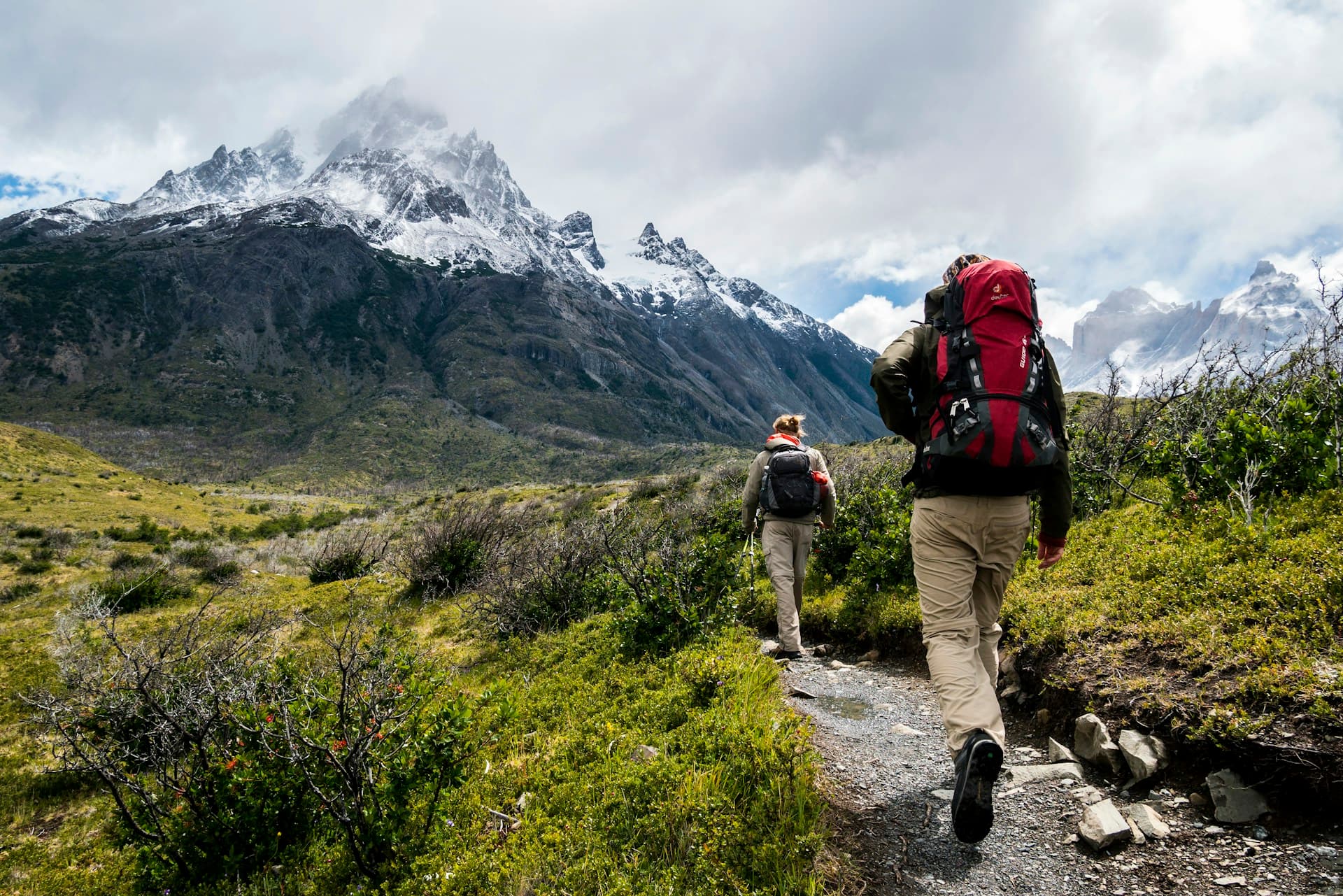
18. Patagonia, Chile/Argentina — Multi-Day Trekking
The adventure: The W Trek (4-5 days) or O Circuit (7-9 days) in Torres del Paine National Park — through ancient forests, past glaciers, along turquoise lakes, and to the iconic granite towers.
Difficulty: Moderate to High. Campsites must be booked months in advance (they sell out fast, especially December-February).
Cost: $500-1,500 for refugio-based (shared accommodation with meals) or camping (bring or rent gear).
Best time: November to March. December-February is peak season.
19. Kilimanjaro, Tanzania — Summit Climb
The adventure: Climbing Africa's highest peak (5,895m) — the world's tallest freestanding mountain — via non-technical walking routes. No ropes, no ice axes, just altitude, determination, and very early mornings.
Routes: Machame (6-7 days, the most popular), Lemosho (7-8 days, the most scenic), and Rongai (6-7 days, the quietest).
Difficulty: High — not technically difficult, but altitude sickness is serious. Success rates vary by route and acclimatization schedule: 7-day routes have significantly higher summit success rates than 5-day routes.
Cost: $2,000-5,000 for a guided climb including park fees, guides, porters, accommodation, and meals.
Best time: January-March and June-October (dry seasons).
Operators: Follow Alice, Altezza Travel, and Tusker Trail.
20. Zhangjiajie, China — Via Ferrata and Glass Walkways
The adventure: The sandstone pillar formations that inspired the floating mountains in Avatar, now accessible via glass-bottomed walkways, the world's highest and longest glass bridge (430m long, 300m above the canyon floor), and via ferrata climbing routes.
Difficulty: Low to Moderate. The glass bridge and walkways require nerve but no fitness. Via ferrata routes require moderate fitness and comfort with heights.
Cost: Park entrance 225 CNY ($30). Glass bridge 138 CNY ($19).
Best time: March to November. Avoid Chinese national holidays (especially October Golden Week).
Planning an Adventure Trip
Adventure travel requires more planning than a standard vacation — booking guides, checking weather windows, understanding fitness requirements, and arranging gear. TripGenie can build an adventure-focused itinerary that accounts for seasonality, difficulty, and logistics, so you can focus on the adrenaline.
Topics

Written by
TripGenie Team
The TripGenie team is passionate about making travel planning effortless with AI. We combine travel expertise with cutting-edge technology to help you explore the world.
@tripgenieGet Travel Tips Delivered Weekly
Get our best travel tips, destination guides, and exclusive deals delivered straight to your inbox every week.
No spam, ever. Unsubscribe anytime.