
Turkey's Extraordinary Range
Turkey is a country that bridges continents, and its geography produces an equally dramatic range of climates. Istanbul has cold, wet winters and hot, humid summers. The Mediterranean coast bakes under relentless sun for six months. Cappadocia freezes overnight in winter but delivers clear, dry skies. Eastern Turkey, around Mount Ararat and Lake Van, experiences sub-zero winters that would surprise anyone who thinks of Turkey as a warm-weather destination.
This variety means there is no single "best time" for Turkey. There is a best time for each region, and a savvy traveler can sequence their itinerary to hit each area in its optimal window. This guide gives you the detail to do exactly that.
Turkey's Climate Zones
The Marmara Region (Istanbul, Bursa)
Istanbul has a transitional climate between Mediterranean and oceanic. Summers are warm and humid (25-33 degrees Celsius), winters are cold and damp (3-9 degrees Celsius) with occasional snow. Rain falls year-round but peaks from November through February.
The Aegean Coast (Izmir, Ephesus, Bodrum)
Mediterranean climate with hot, dry summers (30-38 degrees Celsius) and mild, wet winters (8-15 degrees Celsius). Swimming season runs from June through October.
The Mediterranean Coast (Antalya, Fethiye, Kas)
Known as the Turkish Riviera, this stretch boasts over 300 sunny days per year. Summers are scorching (35-40 degrees Celsius), and winters are mild (10-16 degrees Celsius). The sea stays warm enough for swimming from May through November.
Cappadocia (Goreme, Uchisar, Urgup)
Semi-arid continental climate in central Anatolia. Hot summers (28-35 degrees Celsius) and cold winters (-5 to 5 degrees Celsius) with regular snowfall. The elevation (around 1,000 meters) keeps nights cool even in summer.
Eastern Turkey (Van, Kars, Ani, Mount Ararat)
Harsh continental climate. Winters are long and severe (-15 to -5 degrees Celsius), and the travel window is essentially May through October. Snow can persist at higher elevations until June.
The Black Sea Coast (Trabzon, Sumela)
Lush, green, and wet. Turkey's rainiest region, receiving precipitation year-round. Summers are cool and humid (20-26 degrees Celsius). This is Turkey's most underrated region for adventurous travelers.
Month-by-Month Guide
January and February
Temperature: Istanbul 3-9 degrees Celsius | Cappadocia -5-3 degrees Celsius | Antalya 6-15 degrees Celsius
Winter in Turkey is quiet and affordable. Istanbul's grand mosques, bazaars, and museums are at their most atmospheric without summer crowds. The Grand Bazaar feels less like a tourist gauntlet and more like the working market it has been for 500 years.
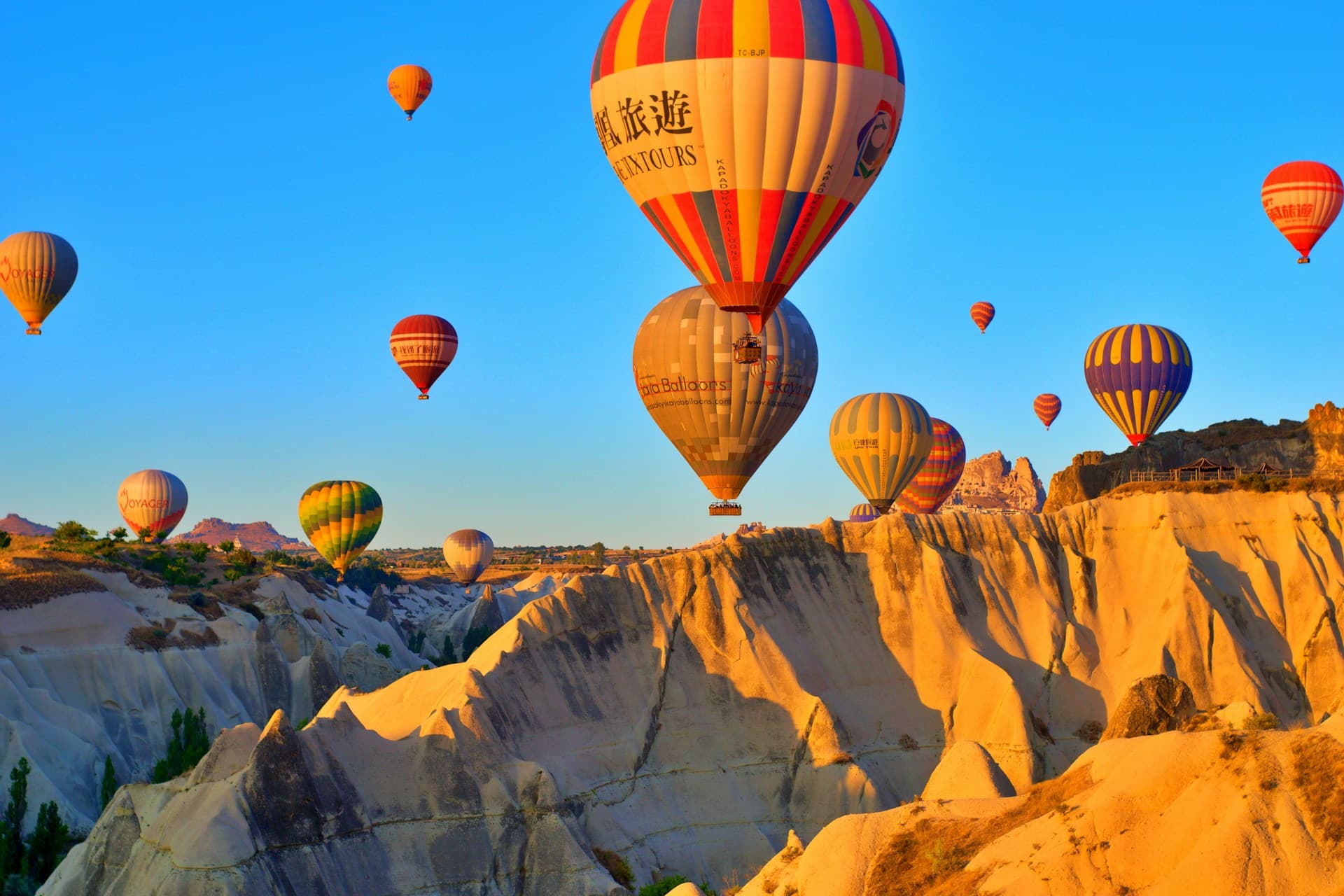
Cappadocia in Winter: The fairy chimneys dusted with snow are hauntingly beautiful, and balloon flights still operate (weather permitting -- cancellation rates are higher in winter). Hotels carved into the rock are cozy with fireplaces and thick blankets. If you get a clear winter morning with snow on the ground, Cappadocia from a balloon is arguably more spectacular than in summer.
Costs: The lowest of the year. Istanbul hotels run 40-60% below peak. A boutique cave hotel in Cappadocia drops from $200+ in summer to $70-100 in winter.
Antalya: The warmest city in Turkey during winter and a popular destination for Russian and European visitors seeking mild weather. While beach swimming is not practical, the old town (Kaleici), the archaeological museum, and the nearby ruins of Perge, Aspendos, and Termessos are best explored in cool weather.
March and April
Temperature: Istanbul 6-14 degrees Celsius | Cappadocia 2-14 degrees Celsius | Antalya 8-20 degrees Celsius
Spring arrives unevenly across Turkey. Istanbul's tulip season peaks in April -- the city plants over 30 million tulips annually, and parks like Emirgan Grove and Gulhane Park burst with color. The Istanbul Tulip Festival runs through April.
Cappadocia: By April, temperatures are comfortable for hiking the valleys (Rose Valley, Love Valley, Pigeon Valley). Balloon flights have higher success rates than winter. This is shoulder season, so prices remain reasonable.
Easter: Turkey is not a Christian-majority country, so Easter has no domestic impact. However, European visitors increase around Easter, creating a small bump in tourist areas.
Costs: Shoulder season pricing. Good value across the country.
May and June
Temperature: Istanbul 15-25 degrees Celsius | Cappadocia 12-25 degrees Celsius | Antalya 18-30 degrees Celsius
May and June are the prime months for a comprehensive Turkey trip. The weather is excellent in every region, the Aegean and Mediterranean seas are warm enough for swimming by late May, and the summer tourist crush has not peaked.
Best Uses:
- Istanbul: Perfect weather for walking the city. Cross the Galata Bridge, explore the Princes Islands by ferry (Buyukada is car-free and lovely), and enjoy rooftop dining in Beyoglu.
- Cappadocia: Optimal balloon season begins. May and June have the highest launch rates (85-95% of mornings) due to stable atmospheric conditions. Balloon flights cost 150-250 euros per person.
- Ephesus and the Aegean: Warm enough to enjoy but not yet the 40-degree inferno of August. The ancient city of Ephesus is best explored in the morning light without extreme heat.
- Lycian Way: Turkey's premier long-distance hiking trail along the Mediterranean coast is at its best in May and early June before temperatures make coastal hiking dangerous.
Costs: Climbing toward peak but still manageable. Book Cappadocia cave hotels and balloon flights 4-6 weeks ahead.
July and August
Temperature: Istanbul 22-33 degrees Celsius | Cappadocia 20-35 degrees Celsius | Antalya 25-40 degrees Celsius
Peak summer and peak tourist season. The coasts are packed with both international and domestic visitors. Turks take their summer holidays in August, and the Aegean and Mediterranean coasts are at maximum capacity.
Istanbul in Summer: Hot and humid but manageable with air conditioning and indoor attractions. The Basilica Cistern, Topkapi Palace's shaded courtyards, and Istanbul's excellent food scene are summer highlights. Evening Bosphorus cruises are popular and pleasant.
Mediterranean/Aegean Coast: Beach season in full swing. Bodrum, Fethiye, Oludeniz, and Kas are at their busiest. The famous Blue Voyage (gulet cruises along the Turquoise Coast) is at peak pricing -- a 7-day private gulet charter for 8-12 guests runs $3,000-8,000+ depending on the boat.
Cappadocia: Hot during the day but enjoyable in the early morning and evening. Balloon flights continue with high success rates. The underground cities (Derinkuyu, Kaymakli) provide natural air conditioning at a constant 13-15 degrees Celsius underground.
Costs: Peak pricing everywhere. Istanbul hotels at 50-100% above off-season. Coastal villas and resorts at annual maximum.
September and October
Temperature: Istanbul 17-27 degrees Celsius | Cappadocia 12-25 degrees Celsius | Antalya 20-32 degrees Celsius
The shoulder season that many experienced Turkey travelers consider the sweet spot. September is essentially an extension of summer on the coast with smaller crowds. October sees temperatures moderate further, the Mediterranean remains swimmable (25-26 degrees Celsius water), and prices drop meaningfully.
October Highlights:
- Cappadocia: Possibly the single best month. Warm days, cool nights, fewer tourists than summer, and the vineyards in Urgup and surrounding valleys turn golden.
- Istanbul: Comfortable walking weather with clearer skies than summer. The Istanbul Biennial (held in odd-numbered years) and the Istanbul International Film Festival add cultural depth.
- Eastern Turkey: The last comfortable month before winter closes in. October is ideal for visiting Ani (the ruined Armenian capital near Kars), Mount Nemrut's giant stone heads, and the shores of Lake Van.
Costs: Declining from peak. Excellent value for quality experiences.
November and December
Temperature: Istanbul 8-14 degrees Celsius | Cappadocia 0-10 degrees Celsius | Antalya 10-18 degrees Celsius
Autumn transitions to winter. November is moody and atmospheric in Istanbul -- the city's cafe culture comes alive as people retreat indoors. Rain increases.
Turkish Bath Season: Winter is the best time to experience a traditional hamam. The Cagaloglu Hamam (built 1741, one of Istanbul's oldest) and Kilic Ali Pasa Hamam (a beautifully restored 16th-century bathhouse, designed by the legendary architect Sinan) offer the full traditional experience. Prices range from 50-150 euros for a bath and scrub.
Hot Springs: Turkey has hundreds of thermal springs. Pamukkale's white travertine terraces and thermal pools are a year-round attraction but are particularly appealing in cooler months. The thermal town of Bursa, accessible as a day trip from Istanbul, has Ottoman-era hamams fed by natural hot springs.
Cappadocia Balloon Season: The Complete Guide
Hot air balloon flights over Cappadocia's fairy chimneys are one of the world's most iconic travel experiences. Here is what you need to know:
Monthly Launch Success Rates (Approximate)
| Month | Launch Rate | Notes |
|---|---|---|
| January-February | 50-60% | Wind and snow cause cancellations |
| March | 65-75% | Improving conditions |
| April | 75-85% | Good reliability |
| May-June | 85-95% | Best window |
| July-August | 80-90% | Heat can cause afternoon turbulence |
| September-October | 80-90% | Excellent conditions |
| November | 65-75% | Weather becoming unpredictable |
| December | 50-60% | Similar to winter months |
Booking Tips
- Book 2-3 weeks ahead in peak season (May-October). Same-day availability exists in winter.
- Price range: 150-300 euros per person for a standard flight (60-90 minutes). VIP flights with smaller baskets (8-12 passengers vs 20-28) cost more but offer a better experience.
- Recommended operators: Royal Balloon, Butterfly Balloons, and Voyager Balloons consistently receive top reviews. Budget operators exist at lower prices but may use older equipment and larger baskets.
- If your flight is cancelled: Most operators offer a free rebooking for the next available morning. Build flexibility into your Cappadocia stay -- 2-3 nights gives you multiple chances if weather cancels one morning.
Ramadan Timing and Its Effect on Travel
Ramadan shifts approximately 11 days earlier each Gregorian year. For upcoming years, check exact dates as they depend on lunar sighting.
How Ramadan Affects Turkey
Turkey is a secular republic with a Muslim-majority population, and the impact of Ramadan on travelers is more moderate than in some Middle Eastern countries:
- Restaurants: Most tourist-oriented restaurants in Istanbul, Cappadocia, and coastal areas remain open during daylight hours. In more conservative cities (Konya, Kayseri, parts of Eastern Turkey), some local restaurants close during the day.
- Alcohol: Available at most hotels, restaurants, and bars throughout Ramadan, particularly in tourist areas and Istanbul's secular neighborhoods like Beyoglu and Kadikoy.
- Atmosphere: Iftar (sunset meal) creates a wonderful communal energy. Street vendors sell special Ramadan foods. Sultanahmet Square in Istanbul sets up large iftar tents.
- Eid al-Fitr (Ramazan Bayrami): The 3-day holiday at the end of Ramadan creates a domestic travel surge. Buses, trains, and domestic flights sell out. Coastal resorts fill with Turkish families. Book transportation well in advance if your trip overlaps.
Eastern Turkey: The Untouristed Frontier
Most visitors never venture east of Cappadocia, but Eastern Turkey offers some of the country's most extraordinary landscapes and historical sites.
Key Destinations
- Mount Nemrut: Giant stone heads from the 1st-century BCE Commagene Kingdom, perched at 2,134 meters. Best visited June through September. Sunrise visits are the classic experience.
- Ani: A ruined medieval Armenian city near the Armenian border, with churches, mosques, and defensive walls standing in an eerie open landscape. UNESCO World Heritage Site. Best May through October.
- Lake Van: Turkey's largest lake, with the 10th-century Armenian Church of the Holy Cross on Akdamar Island. Ferries run from late April through October.
- Kars: Gateway to Ani. The city itself has striking Russian-era architecture from its period under Tsarist rule.
- Mount Ararat: Turkey's highest peak (5,137 meters). Climbing permits are required and must be arranged through an authorized tour operator. The climbing season is July through September.
Practical Considerations
- Domestic flights from Istanbul to Van or Kars take 2 hours on Turkish Airlines or Pegasus (prices $40-100 one-way).
- Infrastructure is less developed than western Turkey. Hotels are simpler, English is less widely spoken, and public transport is less frequent.
- The region is safe for tourists but check current travel advisories for areas near the Syrian and Iraqi borders.
Budget Comparison by Season
Daily Budget Estimates (Per Person, USD)
| Category | Peak (Jun-Aug) | Shoulder (Apr-May, Sep-Oct) | Low (Nov-Mar) |
|---|---|---|---|
| Budget | $40-60 | $25-45 | $20-35 |
| Mid-Range | $80-150 | $55-100 | $40-75 |
| Luxury | $200-400+ | $130-280 | $80-200 |
Specific Costs
- Hagia Sophia entry: 25 euros (foreigners, as of recent pricing changes)
- Topkapi Palace entry: 750 TRY (approximately $23 USD)
- Cappadocia balloon flight: 150-300 euros
- Ephesus entry: 700 TRY (approximately $22 USD)
- Pamukkale entry: 400 TRY (approximately $12 USD)
- Domestic flight Istanbul to Cappadocia (Nevsehir or Kayseri): $40-100 one-way on Pegasus or Turkish Airlines
- Kebab meal at a local restaurant: 150-300 TRY ($5-9 USD)
- Istanbul public transit (Istanbulkart): 15-20 TRY per ride ($0.50-0.60 USD)
- Bosphorus ferry crossing: 15 TRY ($0.50 USD)
Getting Around Turkey
Domestic Flights
Turkish Airlines and Pegasus Airlines have extensive domestic networks. Turkish Airlines is full-service with included luggage. Pegasus is low-cost with extra charges for bags. Istanbul has two airports: Istanbul Airport (IST, main international hub) and Sabiha Gokcen (SAW, Asian side, used by some domestic and budget carriers).
Buses
Turkey's intercity bus network is extensive and comfortable. Metro Turizm, Kamil Koc, and Pamukkale Turizm operate modern coaches with assigned seating, Wi-Fi, and a dedicated attendant serving tea and snacks. Istanbul to Cappadocia takes approximately 10-11 hours overnight.
Rental Cars
Useful for the Aegean and Mediterranean coasts, Cappadocia valleys, and Eastern Turkey. Roads are generally good. Driving in Istanbul itself is not recommended.
Trains
Turkey is investing heavily in high-speed rail. The Ankara-Istanbul YHT line runs in about 4.5 hours. Ankara-Konya takes 1 hour 45 minutes. Coverage is still limited compared to buses.
Plan Your Turkey Trip with TripGenie
Turkey's geographic spread and seasonal variation make itinerary planning genuinely complex. A trip that combines Istanbul, Cappadocia, and the Mediterranean coast needs to account for domestic flight schedules, balloon launch probabilities, coastal swimming conditions, and any Ramadan overlap. TripGenie can sequence your stops to maximize weather quality and minimize backtracking, while flagging key booking deadlines for balloon flights and popular cave hotels. Input your dates, and get a day-by-day plan tailored to Turkey's rhythms.
The Bottom Line
Best overall: May through mid-June or September through mid-October. Comfortable weather in every region, good balloon launch rates in Cappadocia, swimmable Mediterranean, and manageable crowds.
Best for Istanbul: April (tulip season), May, or October. Comfortable walking weather without summer heat and humidity.
Best for beaches: July and August, accepting the heat and crowds.
Best for Cappadocia: May, June, September, or October. For snow-covered fairy chimneys, January or February.
Best for budget travelers: November through March (excluding Christmas/New Year). Dramatic discounts across the country.
Best for culture: Ramadan for iftar atmosphere, April for tulip festival, any month for the incomparable depth of Istanbul's 2,500 years of history.
Turkey is a destination that reveals layers the more you explore. It is not just beaches and ancient ruins -- it is a complex, fascinating country that rewards the traveler who takes the time to understand its rhythms.
Topics

Written by
TripGenie Team
The TripGenie team is passionate about making travel planning effortless with AI. We combine travel expertise with cutting-edge technology to help you explore the world.
@tripgenieGet Travel Tips Delivered Weekly
Get our best travel tips, destination guides, and exclusive deals delivered straight to your inbox every week.
No spam, ever. Unsubscribe anytime.