
India is a place that rewires the way you see the world. The sheer density of color, sound, taste, and humanity in every square kilometer is something no photograph or travel documentary can prepare you for. It is also, honestly, one of the more challenging countries for a first-time visitor to navigate. This guide exists to bridge that gap -- to give you the practical, specific, no-nonsense information you need so that the challenges become manageable and the magic becomes the thing you remember.
Why India Deserves a Spot on Your Travel List
India is the seventh-largest country on Earth and home to over 1.4 billion people. Within its borders you will find Himalayan peaks exceeding 7,000 meters, tropical beaches that rival anything in Southeast Asia, deserts dotted with medieval fortresses, and megacities that throb with an energy unlike anywhere else. The cuisine alone could justify a lifetime of repeat visits -- every state has its own culinary tradition, and the difference between a Kashmiri rogan josh and a Kerala fish curry is as vast as the distance between the two regions.
The country has 40 UNESCO World Heritage Sites, more than 20 official languages, and six major religions practiced by significant populations. You will not "do India" in a single trip. What you can do is choose a region, commit to it, and go deep.
The Visa Process
Most travelers need an e-Visa to enter India. The application is submitted through the official Indian government portal at indianvisaonline.gov.in. Here is what you need to know:
- e-Tourist Visa is available for citizens of over 150 countries
- The standard 30-day e-Visa costs approximately $25 USD and allows double entry
- A 1-year multiple-entry e-Visa costs approximately $40 USD
- A 5-year multiple-entry e-Visa costs approximately $80 USD
- Processing takes 72 hours on average, though applying at least 2 weeks before departure is strongly recommended
- You will need a passport-sized photo with a white background and a scan of your passport bio page
- The portal can be finicky -- use Google Chrome and be patient with page loads
Important: The e-Visa is only valid for entry through designated airports and seaports (28 airports and 5 seaports). If you are crossing a land border, you need a regular sticker visa from an Indian embassy or consulate.
Health Precautions You Should Actually Take
India requires no mandatory vaccinations for entry (unless you are arriving from a yellow-fever-endemic country), but several are strongly recommended:
- Hepatitis A and B -- both are transmitted through food, water, and bodily fluids
- Typhoid -- endemic in many parts of India
- Tetanus/Diphtheria booster -- if yours is more than 10 years old
- Japanese Encephalitis -- if visiting rural areas during monsoon season
- Rabies -- recommended if you plan to spend extended time in rural areas, given the large population of stray dogs
Malaria and Dengue
Malaria risk exists in India, particularly in rural areas and during the monsoon season (June through September). Consult your doctor about prophylaxis -- doxycycline is the most commonly prescribed and cheapest option. Dengue fever, transmitted by daytime-biting mosquitoes, is present in urban areas as well. There is no prophylaxis for dengue, so insect repellent with at least 30% DEET and long sleeves at dawn and dusk are your best defense.
Traveler's Stomach
The infamous "Delhi Belly" is real and common. Your first line of defense:
- Drink only sealed bottled water -- check that the seal is intact before buying
- Avoid ice in drinks unless you are in a high-end establishment that uses purified ice
- Eat fruit you can peel yourself (bananas, oranges, pomegranates)
- Choose restaurants with high turnover -- busy places mean fresh food
- Street food is generally safer when it is cooked in front of you at high heat
- Carry oral rehydration salts (available at any Indian pharmacy for under 10 rupees per sachet) and loperamide (Imodium) for emergencies
Getting Around India
Trains
The Indian Railways network is one of the largest in the world, carrying over 8 billion passenger-kilometers per year. For tourists, it is the single best way to see the country.
- Book through the official IRCTC website (irctc.co.in) or the ixigo app, which has a much better user interface
- AC First Class (1A) is a private cabin with lockable doors -- comparable to a European sleeper train
- AC 2-Tier (2A) has curtained berths in an open carriage -- comfortable and the sweet spot for most travelers
- AC 3-Tier (3A) is similar but with three berths stacked vertically instead of two -- cheaper but more cramped
- Sleeper Class (SL) has no air conditioning and open windows -- authentic but uncomfortable in summer
- Book at least 30 days in advance for popular routes like Delhi-Agra, Delhi-Jaipur, and Delhi-Varanasi
- The Tatkal quota opens at 10:00 AM IST one day before departure for last-minute bookings, but seats go fast
Auto-Rickshaws and Ride-Hailing
In cities, auto-rickshaws are ubiquitous. Always insist the driver uses the meter, or agree on a price before getting in. Better yet, use Ola or Uber, both of which operate in most Indian cities and show you the fare upfront. A typical auto-rickshaw ride across a mid-sized Indian city costs 50-150 rupees ($0.60-$1.80 USD).
Domestic Flights
India has a competitive domestic aviation market. Airlines like IndiGo, Air India Express, and Akasa Air connect major cities for surprisingly low fares -- often $30-80 USD for a one-way ticket booked 2-3 weeks ahead. Use Google Flights or Skyscanner to compare.
Understanding India's Regional Diversity
This is arguably the most important section of this guide. India is not one country in the way that, say, France is one country. The cultural distance between Tamil Nadu and Punjab is as great as the distance between Portugal and Poland. A few broad regions:
North India (Delhi, Agra, Rajasthan, Varanasi)
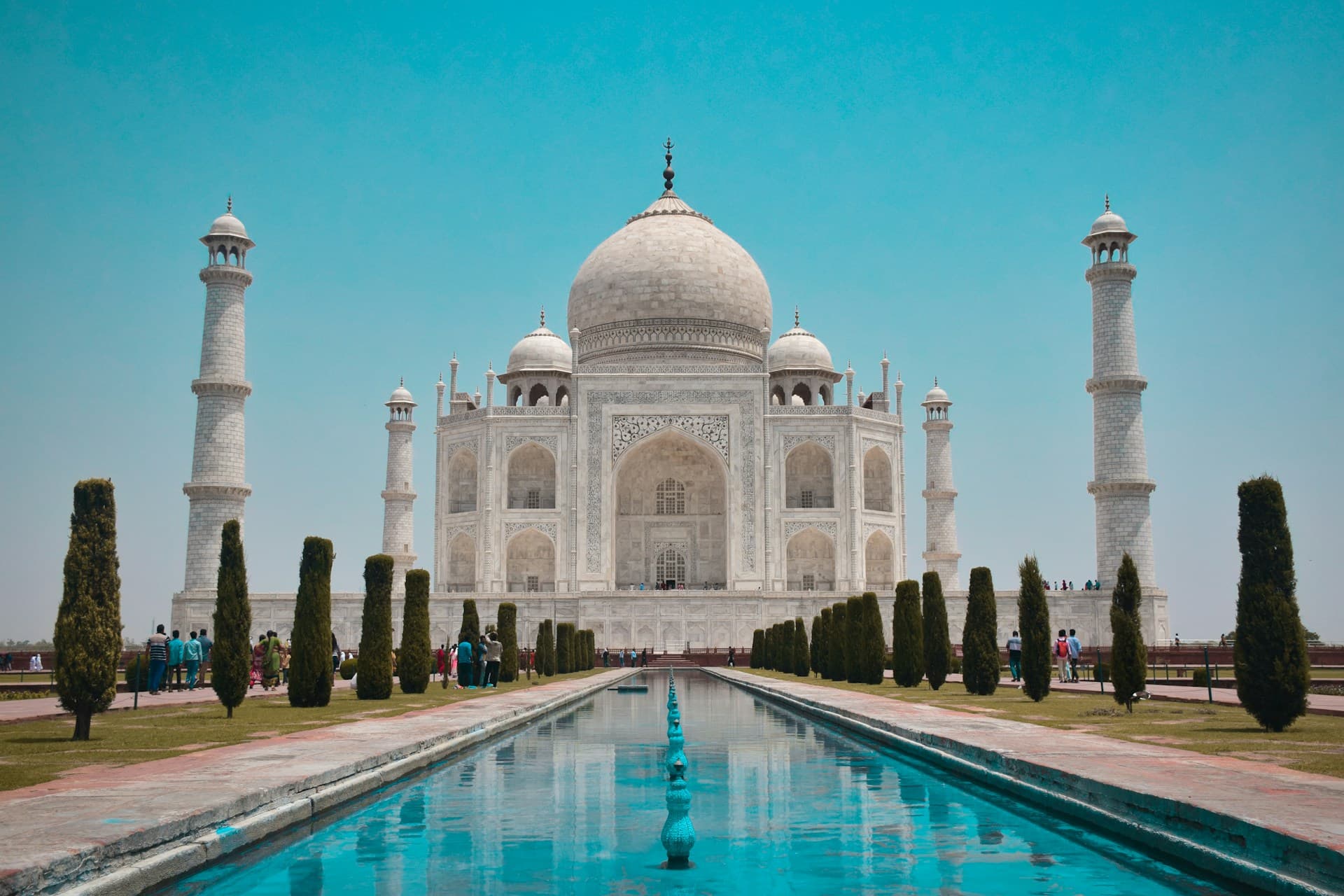
The classic first-timer route. Mughal architecture, Hindu holy cities, desert forts, and the Taj Mahal. The climate is extreme -- scorching summers (45+ degrees Celsius in May-June) and cool, pleasant winters (October-March).
South India (Kerala, Tamil Nadu, Karnataka, Goa)
Lush, green, and culturally distinct from the north. Dravidian temple architecture, backwater cruises, spice plantations, and some of the best food on the subcontinent. The pace of life is generally calmer.
Northeast India (Meghalaya, Nagaland, Sikkim, Arunachal Pradesh)
India's hidden frontier. Living root bridges, remote tribal cultures, Himalayan monasteries, and almost zero tourist infrastructure outside of Gangtok. You need special permits for some states.
The Himalayas (Ladakh, Himachal Pradesh, Uttarakhand)
Mountain passes above 5,000 meters, Buddhist monasteries, trekking routes that rival Nepal, and hill stations built by the British colonial administration. Best visited May-October for most areas.
The Golden Triangle: India's Classic First-Timer Route
The Golden Triangle -- Delhi, Agra, and Jaipur -- is the most popular route for first-time visitors, and for good reason. It concentrates an extraordinary density of historical sites into a geographically compact circuit.
Delhi (3-4 days)
- Old Delhi: Jama Masjid (India's largest mosque), Red Fort, Chandni Chowk market
- New Delhi: Humayun's Tomb, India Gate, Qutub Minar, Lotus Temple
- Food: Eat paranthas at Paranthe Wali Gali in Chandni Chowk; try butter chicken at Moti Mahal in Daryaganj (the restaurant that invented it)
- Stay: Paharganj for budget travelers ($8-15/night), Connaught Place for mid-range ($40-80/night), Lutyen's Delhi for luxury ($150+/night)
Agra (1-2 days)
- Taj Mahal: Visit at sunrise to avoid crowds and see the best light. Entry fee is 1,100 rupees ($13 USD) for foreign tourists
- Agra Fort: A massive Mughal fortress 2.5 km from the Taj -- don't skip it
- Fatehpur Sikri: A ghost city built by Emperor Akbar, 37 km from Agra
- Transport from Delhi: The Gatimaan Express takes 1 hour 40 minutes. Book AC Chair Car for about 750 rupees ($9 USD)
Jaipur (2-3 days)
- Amber Fort: A hilltop fortress with mirror-inlaid halls -- arrive by 8:00 AM to beat crowds
- City Palace: Still partially occupied by the royal family
- Hawa Mahal: The "Palace of Winds" -- best photographed from the cafe across the street
- Nahargarh Fort: Go at sunset for panoramic city views
- Shopping: Johari Bazaar for jewelry, Bapu Bazaar for textiles, Tripolia Bazaar for bangles
- Transport from Agra: The Agra-Jaipur highway takes about 4 hours by car ($35-50 for a private driver)
A Complete 2-Week India Itinerary
| Day | Location | Highlights |
|---|---|---|
| 1-3 | Delhi | Old Delhi, Humayun's Tomb, street food crawl, Qutub Minar |
| 4-5 | Agra | Taj Mahal at sunrise, Agra Fort, Fatehpur Sikri |
| 6-8 | Jaipur | Amber Fort, City Palace, Nahargarh at sunset, shopping |
| 9 | Pushkar | Sacred lake, Brahma Temple, hippie cafes |
| 10-11 | Udaipur | Lake Pichola boat ride, City Palace, Monsoon Palace |
| 12-13 | Jodhpur | Mehrangarh Fort, blue city walking tour, spice markets |
| 14 | Fly home from Jodhpur or Delhi | Jodhpur has direct flights to Delhi (1.5 hours, ~$40 USD) |
This itinerary extends the Golden Triangle into Rajasthan's desert heartland. The Delhi-Agra-Jaipur segment works as a standalone 8-day trip if you have less time.
Budget Breakdown: What India Actually Costs
India remains one of the most affordable travel destinations in the world, but costs vary dramatically based on your style.
Budget Traveler ($25-40 USD/day)
- Accommodation: Hostels and guesthouses ($5-12/night)
- Food: Street food and local restaurants ($5-8/day)
- Transport: Trains in AC 3-Tier or buses ($3-8 per journey)
- Sightseeing: Entry fees average $2-15 per site
Mid-Range Traveler ($60-120 USD/day)
- Accommodation: Heritage hotels and boutique stays ($30-70/night)
- Food: Mix of local and upscale restaurants ($15-25/day)
- Transport: AC 2-Tier trains and occasional private drivers ($10-25 per journey)
- Sightseeing: Guided tours and entry fees ($10-30/day)
Luxury Traveler ($200+ USD/day)
- Accommodation: Palace hotels like Taj Lake Palace in Udaipur ($200-500+/night)
- Food: Fine dining and hotel restaurants ($40-80/day)
- Transport: Private car with driver ($40-60/day), domestic flights
- Sightseeing: Private guided tours ($50-100/day)
Cultural Etiquette: What to Know Before You Go
India has deeply rooted cultural norms that vary by region and religion. A few universal principles:
- Remove shoes before entering temples, mosques, gurdwaras, and most homes
- Dress modestly at religious sites -- cover shoulders and knees. Women should carry a scarf for head covering at Sikh gurdwaras and some mosques
- Use your right hand for eating, passing objects, and greeting people. The left hand is considered unclean
- Head wobble: The Indian head wobble is not a "no" -- it typically means yes, okay, or acknowledgment. Context determines the meaning
- Personal space: Concepts of personal space differ from Western norms, particularly in crowds. This is not rudeness; it is simply a different cultural baseline
- Photography: Always ask before photographing people, especially women and religious ceremonies
- Tipping: Not mandatory but appreciated. 10% at sit-down restaurants, 50-100 rupees for hotel porters, and rounding up for auto-rickshaw drivers is standard
Scam Awareness
India has a well-documented set of tourist scams. Being aware of them eliminates 90% of the risk:
- "The Taj Mahal is closed today": Touts near the Taj will tell you it is closed and offer to take you to a shop instead. The Taj is closed only on Fridays. Ignore them and keep walking
- Overpriced pre-paid taxi booths: At airports, use only the official pre-paid taxi counter inside the terminal, not touts waiting outside
- Gem scams in Jaipur: Someone will invite you to buy gems cheaply and sell them at huge profit in your home country. This is always a scam
- Rigged meters in Delhi: Some auto-rickshaw meters run fast. Use Ola/Uber instead
- Travel agency bait-and-switch: Book trains and hotels yourself through official channels (IRCTC, Booking.com, MakeMyTrip) rather than through random travel agents in tourist areas
- "Free" blessings at temples: A priest may apply a tikka to your forehead and then demand a large donation. A polite "no thank you" before the tikka is applied is perfectly acceptable
How to Handle Aggressive Touts
Firm but polite disengagement works best. A simple "no, thank you" without slowing down is effective. Making eye contact and engaging in conversation -- even to say "I'm not interested" -- often prolongs the interaction. Sunglasses and purposeful walking are underrated defensive tools.
Food Safety: Eating Well Without Getting Sick
Indian food is one of the great culinary traditions on the planet. Here is how to enjoy it safely:
- Thali meals at busy local restaurants are your safest and most delicious option. A thali is a set meal with rice, dal, vegetables, bread, and condiments. It costs 100-250 rupees ($1.20-$3.00 USD) at a local place
- Tandoori items (cooked in a clay oven at extreme heat) are generally safe
- Avoid raw salads at cheap restaurants -- the vegetables may have been washed in tap water
- Lassi (yogurt drink) is safe at busy shops but risky at low-turnover places. The famous lassi shops in Jaipur (like Lassiwala on MI Road) use high-quality, fresh yogurt
- Chai (tea) is safe virtually everywhere because the water is boiled with milk and spices
- Bottled water brands to trust: Bisleri, Kinley, Aquafina. Always check the seal
Connectivity and Practical Essentials
- SIM card: Get a prepaid SIM at the airport from Jio or Airtel. Jio offers unlimited data plans starting at about 299 rupees ($3.60 USD) for 28 days. You need your passport and a passport photo for activation
- Cash vs. cards: India has made enormous strides with digital payments. UPI (Unified Payments Interface) is accepted almost everywhere, but as a tourist, you may not be able to set it up easily. Carry cash in smaller denominations (100 and 500 rupee notes) for markets and auto-rickshaws. ATMs are abundant -- HDFC and ICICI ATMs tend to be the most reliable for foreign cards
- Power: India uses Type C, D, and M plugs. A universal adapter is essential. Voltage is 230V
- Language: Hindi and English are widely spoken in tourist areas. Google Translate works well offline for Hindi if you download the language pack
When to Visit
The best time to visit most of India is October through March. This is the dry, cool season across the north and the post-monsoon period in the south. Specific considerations:
- October-November: Post-monsoon, lush landscapes, pleasant temperatures
- December-February: Peak tourist season, cool nights in the north (bring a jacket for Delhi), ideal for Rajasthan and South India
- March: Holi festival (the festival of colors) -- an extraordinary experience but chaotic
- April-June: Brutal heat in the plains, but ideal for the Himalayas (Ladakh opens in June)
- July-September: Monsoon season. Beautiful in Kerala and Meghalaya if you don't mind rain. Rajasthan and the north are hot and humid
Plan Your India Trip with TripGenie
Putting together an India itinerary involves juggling train schedules, regional climates, festival dates, visa timelines, and a dizzying number of destination options. TripGenie can help you build a day-by-day itinerary tailored to your travel dates, budget, and interests -- pulling together transport connections, accommodation recommendations, and activity suggestions into a single, shareable plan. Whether you are tackling the Golden Triangle or venturing into the northeast, having a structured plan makes the chaos of India feel navigable.
Final Thoughts
India will challenge you. There will be moments of sensory overload, moments of frustration with bureaucracy or aggressive salesmanship, and moments when the gap between what you expected and what you encounter feels vast. But there will also be moments of staggering beauty -- watching the sun rise over the Ganges at Varanasi, eating a thali that costs less than a dollar and tastes better than anything you have ever had, standing inside a 400-year-old Mughal tomb and feeling the weight of history in the carved marble. India earns its place on every serious traveler's list. Go prepared, stay flexible, and let the country show you what it has.
Topics

Written by
TripGenie Team
The TripGenie team is passionate about making travel planning effortless with AI. We combine travel expertise with cutting-edge technology to help you explore the world.
@tripgenieGet Travel Tips Delivered Weekly
Get our best travel tips, destination guides, and exclusive deals delivered straight to your inbox every week.
No spam, ever. Unsubscribe anytime.